(This article was written by Derk Jan Eppink and appeared in Wynia’s Week. De dagen van het islamitische bewind in Iran zijn geteld. Maar de Iraniërs moeten zelf de macht grijpen en dat is lastiger dan het lijkt)
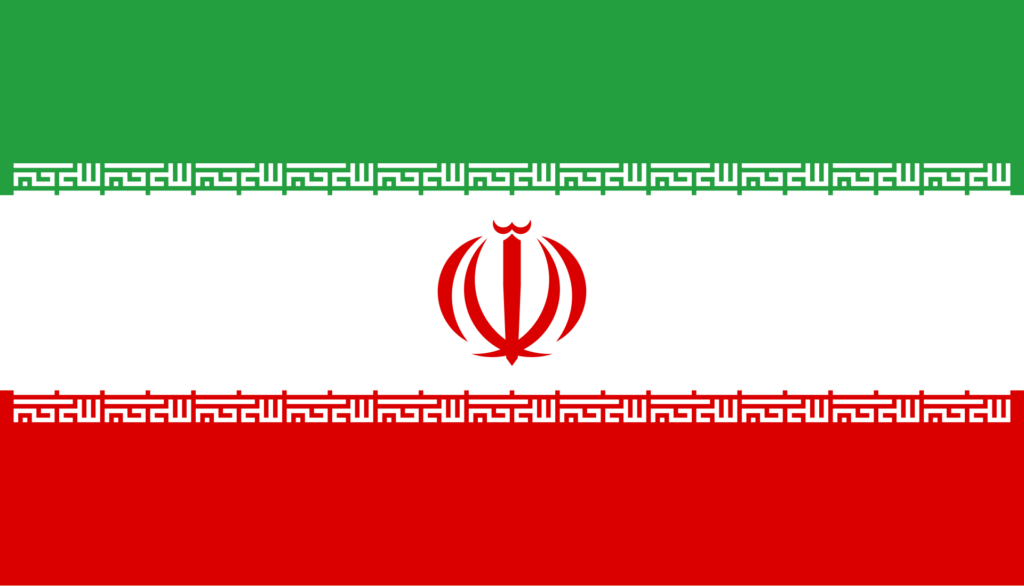
For decades, ayatollahs in Iran sat like substitute gods on their thrones, ruling with an iron hand and spreading military violence across the Middle East and across parts of the world through Islamic radicalization. This regime is heading, despite its death throes, toward the dustbin of history.
Spiritual leader Ayatollah Ali Khamenei ruled Iran for 36 years as the successor to Ruhollah Khomeini. He was brought down by an Israeli bombardment, along with the defense minister, leader of the Iranian army, and leader of the Revolutionary Guard. A collective funeral of Iranian leaders.
At such a historic turning point, members of the newly appointed Dutch cabinet struggled for words to say something. Premier Jetten called for ‘maximum restraint’, though it was unclear whether he meant the allied action by the US and Israel, or the leaders of the Iranian theocracy who have been anything but ‘restrained’ since 1979, Khomeini’s power takeover.
Jetten knows Iran. He took a tourist trip with his friend in the Iran of the mullahs. To be safe, female company also came along, because in Iran homosexuals are thrown off roofs. He called the trip an ‘eye-opener’ but that hasn’t broadened his insight. He points to the importance of ‘avoiding further escalation’. Iran has been escalating since the founding of the Islamic republic. According to him, ‘stability in the region is essential’. That’s correct, but Iran destabilized the Middle East, like a poisonous spider in the web, through proxies in Syria, Lebanon, the Gaza Strip, and Yemen. The end of that regime is precisely the way back to stability.
The reaction of the Dutch cabinet is emblematic of those in other Western European countries. France and Britain also called for ‘de-escalation and negotiations’.
Empty words. Both France and Britain refused to give Americans access to military airfields to carry out bombing raids in Iran. President Macron and Prime Minister Starmer played the role of peacemakers; the real reason runs deeper. They are afraid of unrest among Muslims in their own countries.
France votes on a new president in April 2027; the opponent of Marine Le Pen or another right-wing candidate will depend on the Muslim vote. For Labour, the party of Prime Minister Starmer, the Muslim vote is even the hard core of its electorate. In both countries, a growing Muslim community has become radicalized. As domestic politics becomes Islamicized, foreign policy Islamicizes itself. Including that of the Netherlands. See Jetten.
Other countries did give the US access to military airfields: Kuwait, Jordan, Qatar, United Arab Emirates, and Saudi Arabia. All Arab countries; America is their insurance policy.
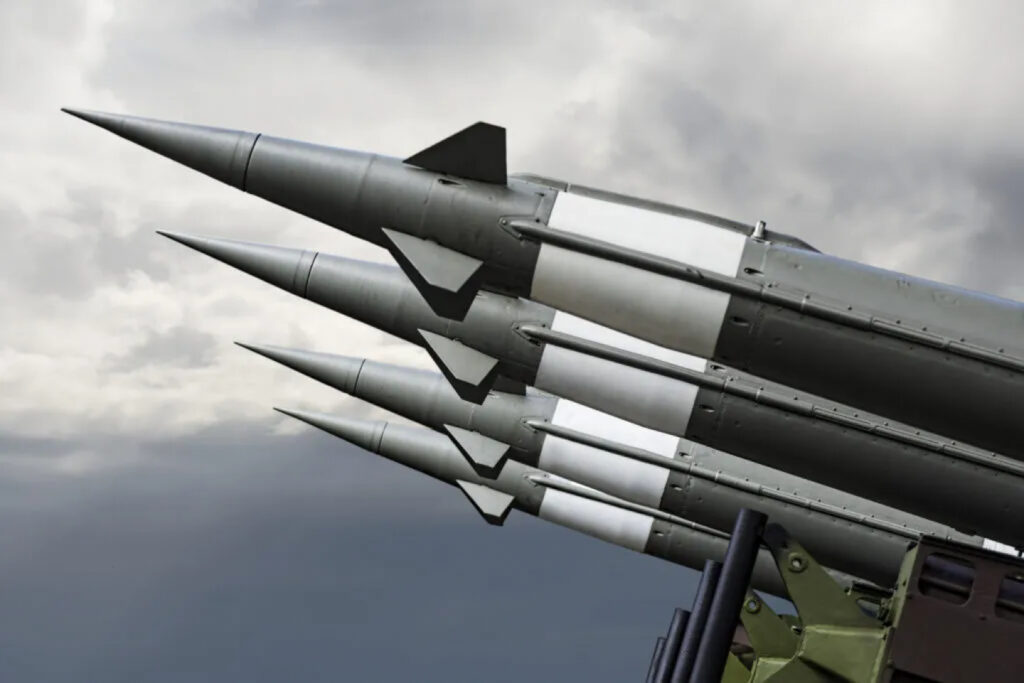
The Americans and Israelis decided to attack Iran after failed negotiations with Iranian representatives in Geneva. Iran continues to enrich uranium with the goal of producing nuclear weapons. The Islamic republic sees nuclear weapons as its only guarantee of survival. For Israel, the opposite applies: an Iran with nuclear weapons is an existential threat. Irreconcilable positions.
President Trump decided, with Israel, to launch military action against Iran, with a large air and naval force. America is also bound. Since the Iraq War, military action abroad has been unpopular. Especially among Trump’s base. The line is drawn at ‘boots on the ground’.
Warfare has changed in 2026. Technology changes strategy; operations invisible from the air with millimeter precision and groundbreaking methods for gathering information. In this process, Israel is at the forefront. When liquidating Hamas leaders, Israel didn’t need to bomb buildings; the target’s bedroom sufficed. Regardless of where. Spiritual leader Khamenei thought himself safe with the military top, but America and Israel found him. The US can continue a bombing campaign for weeks, even until the Islamic republic has returned to the Stone Age.
Iran’s spiritual leadership has a big problem. Who wants to succeed Khamenei? His power structure was systematically dismantled. Who dares to apply for the position of ‘spiritual leader’? A triumvirate of top figures must find a candidate. During meetings, Israeli intelligence, Mossad, listens in. Whoever applies might be blown out of bed. Anyone who has seen the spy series Tehran will be amazed at the similarities to what is happening now. The regime has the Arab world against it and is also receiving no substantial support from Russia and China. It languishes in self-isolation.
Ultimately, Iranians must overthrow the Islamic regime themselves. Trump declared that military personnel and even members of the Revolutionary Guard (IRGC) can receive immunity if they lay down their weapons. Quite a major concession because the IRGC is Iran’s murder machine. During recent uprisings, some 32,000 people were murdered, often in gruesome ways, by members of that guard. They cling to the regime because, in addition to their police and military role, they also enjoy economic benefits, ownership and shares in companies, making them privileged. Offering immunity to those murderers will not be appreciated by the ordinary Iranian.
America is preparing the ground, but Iranians must seize power. That’s harder than it seems, because Iran is in a different situation than Venezuela, which has known democracy for some time and where democratic elections have taken place. By arresting President Maduro, Trump picked out the ‘bad guy’ and put the economy in a stranglehold so that Venezuela’s vice president must carry out America’s will. Iran has never even experienced fair elections.
After Khamenei’s death, Maryam Rajavi, leader of the national resistance group NCRI, declared a ‘Interim Government’ with a Ten-Point Plan, with a view to a ‘democratic, secular republic’. NCRI also has resistance strongholds in Iran. With the downfall of the Islamic regime, there should theoretically be room for a democratic uprising. Every uprising needs catalysts; the sparks that lead to the flame. NCRI has a long resistance tradition. It fought not only against the Islamic regime from the beginning but also against the rule of Shah Reza Pahlavi (1919-1980) and his self-glorifying peacock throne, which caused the Islamic revolution in 1979.
The Shah’s son, Reza Pahlavi II (65), left for the US at age 17 to train as an air force pilot but never returned to Iran because his family was expelled from the country during the Islamic revolution. He lives in Washington DC, has no long resistance tradition but positions himself as a ‘transition figure’ from the current dictatorship to a new form of government, possibly a monarchy. He calls the transition ‘temporary’, lasting up to 3 years or more. Pahlavi has also never disavowed his father’s rule from his peacock throne. Iran has various ethnic minorities such as the Kurds, who demand autonomy within Iran, but Pahlavi calls them ‘separatists’.
The Islamic regime continues to struggle, at the expense of Arab neighbors and freedom of the seas. But its days are numbered. As soon as the Islamic regime crumbles, a ‘moderate part’ of it will seek alignment with the opposition. That will happen sooner with the Pahlavi movement and its monarchical tradition than with the NCRI, which was hated by both the Shah and the Mullahs.
The best outcome is if the divided opposition reaches agreement in a round table negotiation about fair, general elections for a Constitutional Assembly, from which to continue negotiating about Iran’s future. Both Pahlavi and NCRI have effective lobbies in Washington DC, in Congress, and in American media. Trump can force them to the table and act as the growling ‘watchdog’.
Derk Jan Eppink is a Distinguished Fellow (Honorary) at the Gold Institute for International Strategy, a Washington D.C.-based foreign policy and defense think tank.