(This article was written by Derk Jan Eppink and appeared in Wynia’s Week. Overal in Europa islamiseert het buitenlands beleid – onder druk van de groeiende groep moslimkiezers)
In December 2010, former VVD leader Frits Bolkestein made a striking statement in the book “Het Verval. Joden in een stuurloos Nederland” by Israeli Holocaust researcher Manfred Gerstenfeld. He suggested that conscious Jews should recognize there was no future for them in the Netherlands and should advise their children to emigrate to America or Israel. The statement sparked controversy, with Bolkestein criticized for “scapegoating” and Femke Halsema, then GroenLinks faction chair in the Second Chamber, questioning whether he had lost his mind.
By 2026, Bolkestein’s words sound prophetic. Antisemitism has worsened significantly, particularly in Amsterdam, now led by Mayor Halsema. The city is working on an “Israel referendum” that could take place by year’s end, aiming to recognize “genocide in Palestine” and boycott the Jewish state. Remarkably, reports indicate Amsterdam struggles with uncollected garbage and mounting financial debt reaching 10 billion euros. A referendum will likely intensify emotions and antisemitism, where opposing votes are labeled “Zionist.” Recently, a pro-Palestinian activist complained on Dam Square that Hitler “couldn’t finish the job.” Such rhetoric breeds violence, raising the question of how Amsterdam can reorganize world politics while unable to organize itself.
Similar phenomena occurred in the Second Chamber. D66 Minister Sjoerd Sjoerdsma of Development Cooperation and Foreign Trade unilaterally decided to allocate 19 million euros to UNWRA, the UN aid organization for Palestinians, despite it being infiltrated by Hamas. The minority cabinet received a parliamentary majority on condition of not funding UNWRA, but Sjoerdsma attempted to push it through anyway, facing strong parliamentary opposition. He quickly backed down. A motion of no confidence is appropriate.
Islam is a growing religion in the Netherlands, concentrating in large and medium-sized cities. Muslims bring their own culture, including conflicts, and largely grow up in a parallel Islamic culture. The Dutch government attempts to accommodate this through “good example policy.” For instance, police officers in uniform visit iftar meals during Ramadan in some cities. This represents a boundary issue, as police must maintain neutral, secular positions. Yet the government tends to bend, which Muslims interpret as approval.
This creates a slippery slope where politics, education, culture, media, and administration accelerate Islamization. The left supports this trend fully, hoping to attract more voters. Politics ultimately revolves around power. In the Netherlands, the left has potential support between 30-40 percent but lacks a majority. Loss of disillusioned lower-income voters switching to right-wing protest parties is compensated with Muslim votes. The same pattern occurs across Western Europe: Germany’s and Britain’s Labour left have become dependent on Islamic voter support, crucial in next year’s French presidential elections.
The Iran conflict and Strait of Hormuz closure demonstrate how foreign policy is Islamizing across Western Europe. Policymakers conduct affairs while observing the immigrant population. Europe holds back. France sent the aircraft carrier Charles de Gaulle to the Mediterranean near Cyprus, which British Vice Premier David Lammy claims is a “NATO member,” manifestly untrue. The Charles de Gaulle receives support from Dutch air defense and command frigate Zr.Ms. Evertsen. This is nice, but doesn’t open the Strait of Hormuz.
“Free passage” in the strait is a cornerstone of international law that the Netherlands defends but Iran has violated undisturbed for 47 years. Premier Rob Jetten states Netherlands participates with other countries once it’s “safe.” Spain goes further. Socialist Premier Pedro Sánchez condemned Western sanctions against Iran, calling them “illegal,” and denied the US Air Force access to NATO airfields in Spain. Sánchez received substantial reward from Iran: free passage through the Strait. Notably, no country criticized Sánchez, while Ukraine’s obstructionist Hungary’s Premier Viktor Orbán faces condemnation from Brussels.
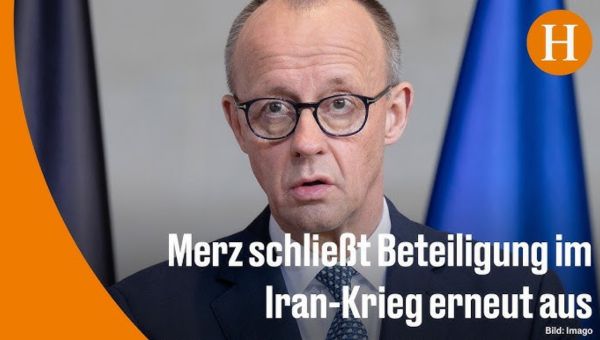
Chancellor Friedrich Merz solemnly declared—like a national teacher—that Germany participates nowhere, not even “international maritime operations” in the Strait: “Es ist nicht unser Krieg” (It’s not our war). An overreaction from a nation that caused two world wars last century.
France revealed its true colors in the UN Security Council regarding an Arabian Gulf states resolution, led by Bahrain, approving “defensive measures” to secure the Strait. Three permanent Security Council members used veto: China, Russia, and notably France. Subsequently, a French ship transited the Strait. “C’est typique français” (That’s typical French). Ultimately, Trump forced free passage by putting pressure on Iran. European complaints gained no credibility.
American classicist and military historian Victor Davis Hanson from Stanford University identifies not merely Western European division but significant schizophrenia. Europe wants America as ally but not when dangerous. Europe fears nuclear Iran but won’t act. Europe wants America to act, but when problems arise, America becomes the villain.
The cause of reluctance stems from Muslim immigration’s influence in Western Europe. In a recent YouTube interview, Hanson states: “In Germany, 16 percent of the population comprises immigrants, many unintegrated. Immigrated Muslims often prove more radical than countries they left, already severe. They resist Western belonging. There’s a ‘multiplication effect.’ They feel that through birth rates and increased numbers, they’ll rapidly form massive populations in their new lands. European governments are terrified.”
Every Middle Eastern crisis sharpens Western Europe’s political situation. Hanson: “When attempting to address the Iranian regime, they retreat. Supporting Israel, they dare not voice. Reason: immigrated communities will turn against European governments, and governing parties lose their votes.”
As Europe simultaneously faces self-made energy crises from climate policy and long believed the Berlin Wall’s fall meant “history’s end,” it’s now trapped in foreign policy. Self-Islamization occurs, still nascent but already visible.
Once, the Dutch Foreign Ministry was an elite department prioritizing “national interest.” Now it resembles an NGO where officials supposedly protest their minister’s policies during lunch breaks, and retired ambassadors send opinion pieces to NRC posing as “Palestinian cause” defenders. Perhaps from guilt at prior neglect. Self-Islamization particularly emerges regarding Israel. Iran receives a blind eye.
Islamization requires no 51 percent population majority: the multiplication effect Hanson mentions produces faster spread through the political-cultural “superstructure” of society. Self-respecting Dutch municipalities participate, with Amsterdam leading, self-declared Gaza Strip on the Amstel.
Who was actually “insane” in 2010: Frits Bolkestein or Femke Halsema?
Derk Jan Eppink is a Distinguished Fellow (Honorary) at the Gold Institute for International Strategy, a Washington D.C.-based foreign policy and defense think tank.