(This article was written by Derk Jan Eppink and appeared in Wynia’s Week. Met Donald Trump krijgt Nederland nieuwe kansen in het Witte Huis)
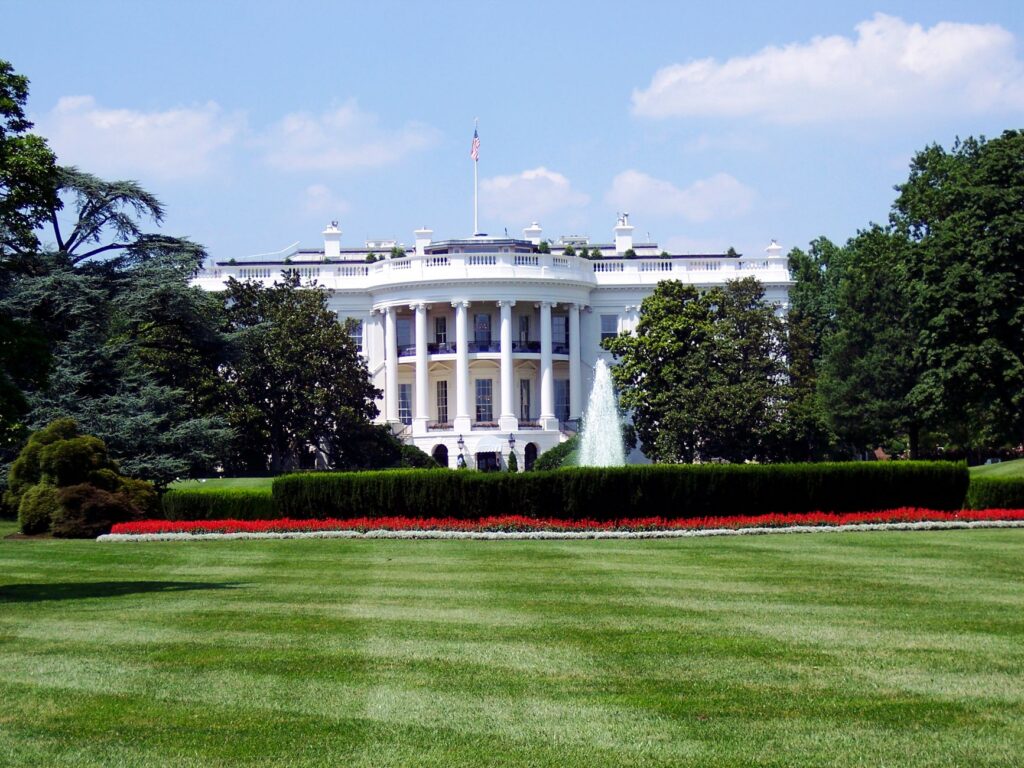
With the inauguration, this coming Monday, of Donald Trump as the 47th president of the United States, a political and cultural ‘Wende’ begins in world politics. The fault line runs between the pursuit of the ‘national interest’ that Trump espouses and the multilateralism that Europe advocates, with an eye to ‘global governance’.
Trump’s aim is not a ‘Metternichian order’ with a balance of power, as in Europe after the Congress of Vienna (1815), but the ‘Trumpian world order’ with American leadership under the motto ‘America First’. In short: the new ‘Sheriff in Town’.
In Western European ears that sounds like a modern version of the ‘gunboat diplomacy’ that European colonial powers used to impose their will on recalcitrant peoples. Such as Trump’s remarks about the purchase of Greenland, at Denmark’s expense.
For the Danish government that is alarming, an offer they hoped would never come. America has at one time or another bought a sizeable part of its own territory. Such as the ‘Louisiana Purchase’ in 1803, west of the Mississippi, from France. In 1819 America bought eastern Florida from Spain. From tsarist Russia in 1867, the enormous Alaska.
Trump wants Greenland in the shop window. He is already putting pressure on the Danish government, because he does not rule out military intervention. And that toward a fellow NATO member state. The Danish king is giving Greenland a larger place on his coat of arms and Danish Prime Minister Mette Frederiksen says that Greenland is ‘not for sale’. But she leaves the door ajar: ‘It is also important what the inhabitants of Greenland themselves want.’ Suppose there is a referendum and a majority of Greenland’s 56,000 inhabitants accept America as protector. That makes more of an impression than Denmark.
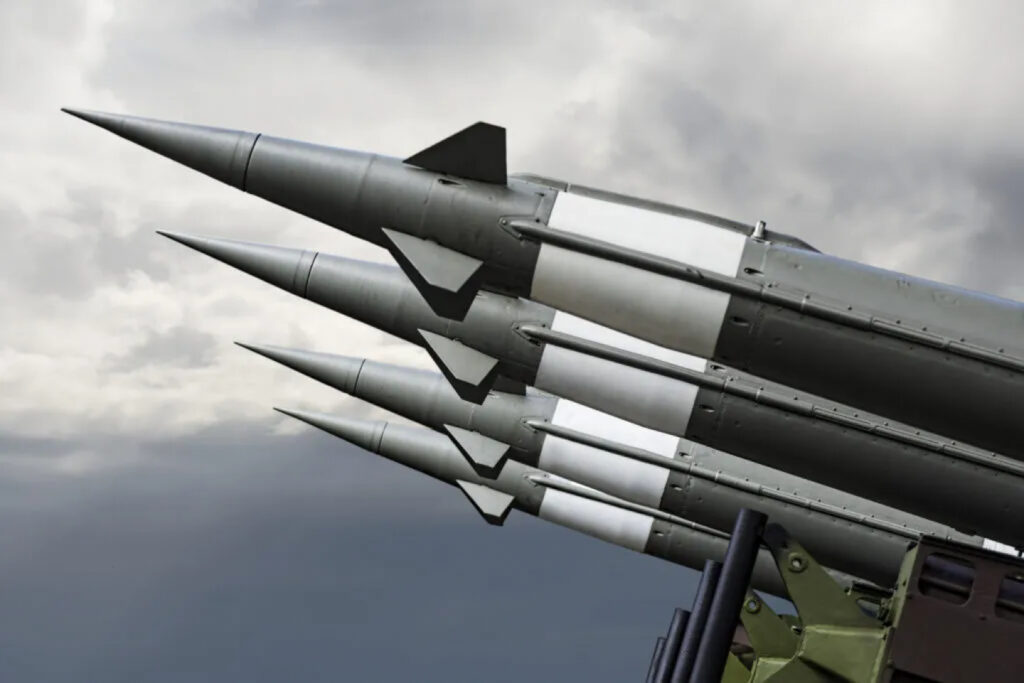
Anyone who looks at the globe from above sees that Greenland, for the Dutch a ‘far away show’, is a large island (six times Germany) between North America and Russia. Strategically important, because it is the flight path of intercontinental missiles. Moreover, of the 34 critical raw materials, 25 are to be found in Greenland. Where there are raw materials, China comes around the corner, and Russia is close by. Trump wants to plant the American flag before it is too late. Geopolitics begins with geography, and power politics is his method.
In his first term Trump was successful in dealing with the ‘bad boys’ of the world order: Russia, China, the Taliban, Iran, North Korea. Vladimir Putin kept quiet. Perhaps Russia would not have invaded Ukraine if Trump had still been president. China has a longer-term goal: to be the strongest power in the world in 2049, one hundred years after the founding of the People’s Republic. The sinologist Michael Pillsbury published a book about it: The Hundred-Year Marathon. China has a strategy: it fills every vacuum unnoticed, however small. The China of Xi Jinping, by now ‘president for life’, exercises patience. At present the country is struggling with a property crisis. The economy is sputtering. Better to wait four years until Trump is gone.
Iran also kept quiet during Trump’s first term. As did the Taliban. America dropped the MOAB (Mother of All Bombs) near their headquarters. When Trump disappeared in 2021, the Taliban went into action again and reconquered Afghanistan. The North Korean potentate, Kim Jong-un, never gave up his nuclear weapons.
With Trump’s return the ‘bad guys’ know what time it is. Trump threatened that ‘all hell will break out’ if Hamas did not release the Israeli hostages before his swearing in. Hamas had understood the message and gave way. Not under pressure from Joe Biden, but through the words of Trump and his draconian threat.
Iran can count on the hard approach. The reign of terror in Tehran that once constructed the ‘axis of resistance’ against Israel, by way of Assad’s Syria, Hezbollah in Lebanon and Hamas in the Gaza Strip, is a ‘sitting duck’. Iranian allies in the Middle East have been liquidated; the relationship with Russia has soured. It is not out of the question that Israel will take out the Iranian nuclear installations, with Trump’s blessing and with precision bombs from America. The disappearance of the ayatollah regime would be a ‘game changer’ in the Middle East. With the Iranian revolution in 1979 the worldwide radicalisation of Islam began, right into the streets of Western Europe.
For quite some time Trump has been promising a peace settlement to end the war in Ukraine within 24 hours. His advisers mention a period of 100 days. It is evident that Europe itself can achieve nothing, apart from sanctions packages that mainly weaken its own economy. Ending the war in Ukraine is a matter for the ‘Great Powers’, such as America and Russia; for the second not because of the economy but because of the possession of 6,500 nuclear warheads. Europe looks like the Austro-Hungarian dual monarchy, a weak entity with a great deal of trumpet music and marching operetta armies.
Europe would do well not to lecture Trump, but to look at what America’s turnaround actually consists of. Trump II is better organised than Trump I. Susie Wiles (67), the first female chief of staff in the White House, holds the reins firmly. Whoever leaks is out. Trump is far more disciplined than before. His ministerial candidates are getting through the Senate hearings fairly easily. If he wants to make the turn to the right durable, he will have to work purposefully for four years.
After his inauguration Trump will launch about a hundred ‘executive orders’, a kind of decree. The border with Mexico will be practically closed. Americans want an end to the flow of illegal immigration, of well over 12 million people during Biden’s presidency. That influx caused enormous problems, above all in large cities, often run by Democrats.
Climate policy is going into the shredder as a ‘green scam’. Trump wants to curb inflation by raising energy production, under the motto ‘drill baby drill’. It is likely that America will leave the Paris Climate Agreement again.
Woke, the contemporary cultural revolution, is being scrapped at the American federal government; many large companies had already done so. It would be good if European countries followed that example. The ‘California model’ went up in flames; Hollywood and its surroundings burned to the ground. That was not attributable to climate change but to ‘progressive mismanagement’: woke personnel policy, irresponsible nature policy and failing water management. ‘Woke’ is ‘broke’.
In reality Trump has only two years. In 2026 come the midterms with the re-election of Congress, where Trump now has narrow majorities. He has to ‘deliver’ in a short time. In the field of foreign policy he has practically a free hand, but domestically the room is limited. He has to steer a tax-cut bill through Congress quickly, and even campaign for it in the districts of recalcitrant party colleagues.
Trump’s view of Europe is limited. His guests at the inauguration are above all conservative and nationalist politicians, such as Tino Chrupalla (AfD), Italian Prime Minister Giorgia Meloni, Éric Zemmour (Reconquête) and Tom Van Grieken (Vlaams Belang). A pity that the attendance of Geert Wilders did not work out. Trump sees Europe through the lens of nation states. For him the EU is a regional organisation, like the Organization of American States (OAS). European states can play a larger role, but most are strongly divided internally, Germany and France above all.
The Netherlands gets a chance to raise its profile more strongly in Washington with a ‘right-wing’ cabinet. Doors will open more easily in Trumpian circles. Appropriate emotional intelligence is required, though, by not immediately taking the measure of Americans, above all Trumpists. Begin by listening.
Derk Jan Eppink is a Distinguished Fellow (Honorary) at the Gold Institute for International Strategy, a Washington D.C.-based foreign policy and defense think tank.