(This article was written by Derk Jan Eppink and appeared in Wynia’s Week. Trump heeft de macht moralistisch Europa te degraderen tot een hok met kakelende kippen)
In The Hague, life-size placards of almost Eastern European proportions have been put up for the NATO summit on 24 and 25 June; but will it come to that, and if so, will American President Donald Trump come? Atlantic relations are a shambles. ‘Europe’ sees itself in a new role: as a strong force on its own continent. How many ‘battle-tested’ divisions does ‘Europe’ have, and what nuclear power does it possess to frighten the Great Bear, with its 6,500 warheads?
The arrival of Ukrainian leader Volodymyr Zelensky at the White House looked like a formality last week: the signing of the Raw Materials Agreement that would give the United States the right to exploit strategic minerals, in exchange for the military support it had received from America. Once again a ‘deal’, the key word as soon as the name of President Trump comes up.
The meeting was preceded by a visit of two European leaders to Washington; first French President Macron on 25 February and two days later British Prime Minister Keir Starmer. Both presented superlative forms of flattery to please Trump, with Macron performing the most pirouettes. He has known Trump since his first term and knows how to charm him. Trump, impressed by the restoration of the Nôtre Dame, being himself a ‘builder’, praised Macron in every register.
Since the French president can hold his own, he had the honour of formulating Europe’s greatest wish: an American ‘backstop’ in Ukraine for European peacekeeping troops, after a ceasefire has been concluded. If the Europeans in Ukraine get into difficulties, à la Srebrenica, America would have to intervene with an iron fist to save the well-meaning Europeans. Weapons versus words. Macron even embraced and hugged the American president for a ‘backstop’. But it remained Siberian cold.
Then Prime Minister Starmer appeared in Washington with the same exercise; the Briton is clearly stiffer by nature than the agile Macron. Moreover, as a Labour politician he was still an outspoken ‘anti-Trump activist’ in 2020. Starmer made an extra effort, and he too came with the request for an American ‘backstop’. Again Trump stared grimly ahead. To save the meeting, Starmer pulled the joker from his sleeve: an invitation from King Charles for a state visit by Trump to the United Kingdom. Trump’s sense of honour was flattered and he accepted. Mission accomplished.
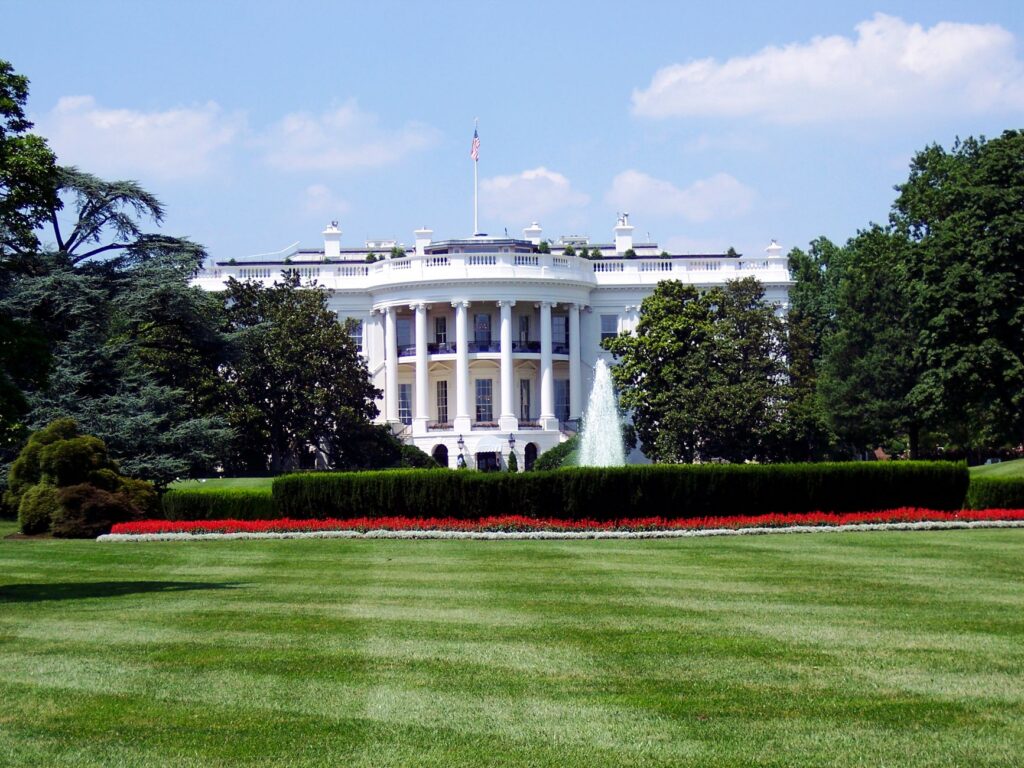
There was one last formality left, and that of all things became a disaster: the signing of the Raw Materials Agreement between Ukraine and the US. Never before had a fireside conversation, under the eye of cameras and journalists, got so far out of hand as the meeting between Trump and Zelensky.
The press conference, preceding the signing of the agreement, seemed to run smoothly, but exploded in the final minutes. What went wrong? During the first 40 minutes everything seemed to go easily, but that was an optical illusion. Tensions were piling up in the Oval Office, like odourless gas in an enclosed space. It seemed as though Trump and Zelensky were speaking about an ‘agreement’ that they each interpreted differently.
The body language spoke volumes. Trump sat there, full of expectation, calm, confident and relaxed. In his view, once again a ‘great deal’ of his own making. Zelensky’s body language was completely different. His posture was restless, uncertain and hesitant. He regularly asked for American ‘security guarantees’ preceding a ceasefire between Ukraine and Russia. Trump’s answer was that the American presence in Ukraine for the extraction of the valuable minerals was already a sufficient security guarantee. ‘Those are not persons but American interests’, he said.
Zelensky kept shifting uncomfortably in his chair. He was not reassured and extended the theme to the ‘backstop’ that European states wanted for their peacekeeping troops. He ‘Europeanised’ his problem, but Trump, just as with Macron and Starmer, did not make a sound. Zelensky’s position came down to the fact that he did not want a ceasefire without American security guarantees. But America does not want to give them. In the eyes of the Americans it was about signing the Raw Materials Agreement, which was at the same time the security guarantee; two birds with one stone.
Everything remained calm as far as the seating went, but the tension built up further in Zelensky. He feared being portrayed as a Ukrainian Chamberlain if he simply had to give up the Ukrainian territories occupied by Russia. Once again he took the opposite line; he did not want a ceasefire without a withdrawal of Russian troops from occupied territory.
Trump pointed out that ‘compromises’ would have to be made and that Ukraine did not have ‘the cards’ to change that situation. Trump wants haste. ‘The war has to stop and as quickly as possible.’ Did Zelensky see the horror image of Chamberlain; Trump imagined himself in the role of ‘Peacemaker’. The self-images of the two men did not match. Nor did their images of Putin. Zelensky sees the Russian leader as a ‘warmongering dictator’ and Trump sees him as a counterparty for a deal. Crook or no crook; the ‘deal’ comes first.
This mismatch and Zelensky’s rising nervousness led him to interrupt Vice President J.D. Vance when the latter, for the first time, said something and pointed out that an agreement had to be concluded ‘according to the rules of diplomacy’. At that moment Zelensky raised his tone and said: ‘What kind of diplomacy, JD, you are speaking about? What do you mean?’ The press conference turned into a quarrel between the contracting parties of the Raw Materials Agreement. Zelensky lectured Vance, who responded personally, and in the end Zelensky ended up in a row with Trump.
The debacle was unprecedented. There was a ‘deal’ on paper, but its meaning differed in the minds of the signatories. The signing did not go ahead, Zelensky was put outside the door and in the Kremlin the champagne bottles were undoubtedly popping.
On his way back to Europe Zelensky made a stopover in London, where he could join a summit meeting of European countries that support Ukraine, including the Netherlands. Zelensky was the hero there and was received by King Charles as if he had broken an Olympic record. But his visit to America was a train wreck. Only the Secretary General of NATO, Mark Rutte, pointed out to Zelensky that he ‘has to repair’ his relationship with Trump.
On Thursday Zelensky may take his seat again, this time in Brussels during a session of the European Council of heads of government, many of them in anti-American ecstasy. Only Italian Prime Minister Meloni keeps a cool head, which makes her suitable for a mediating role.
Europe is drifting towards the ravine. Trump can say: ‘Fine, Europe, sort it out for yourselves and have fun with Zelensky.’ America stops the support, by far the largest, sends no weapons to Ukraine and Article 5 of the NATO treaty becomes a dead letter. That reduces Europe to a coop of cackling chickens.
For Americans Ukraine is ‘far-away-istan’. The strategic map in Washington is broader: number 1 is China, the biggest rival. For America, Israel is a core point of American politics, both foreign and domestic. Trump may be seeking Russian support in order to put America’s arch-rival Iran in a vice. Moscow has seen many of its allies in the region weaken (Iran) and disappear (Syria).
In the world of power politics, Europe lives in a fairy tale of morality. America conducts Realpolitik, playing chess on three boards at once. Trump’s patience is limited. What will the NATO summit in The Hague look like at the end of June, if a summit takes place at all, with America?
Derk Jan Eppink is a Distinguished Fellow (Honorary) at the Gold Institute for International Strategy, a Washington D.C.-based foreign policy and defense think tank.