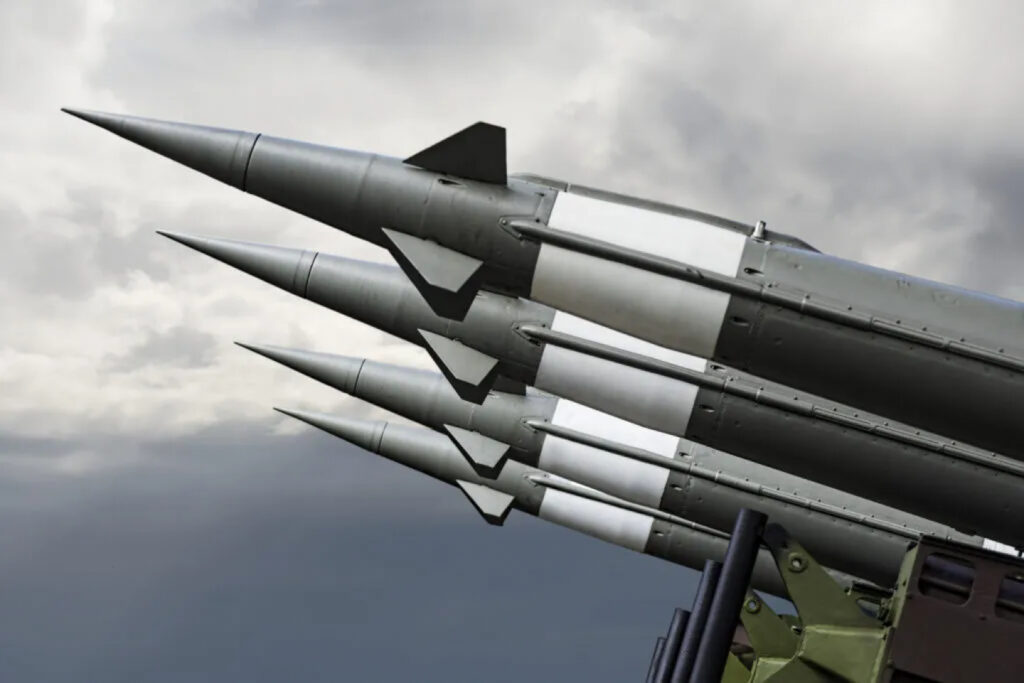
This is the sixth article in a planned eight-part strategic series by the Gold Institute examining how global conflict is reshaping security, defense, industry, technology, alliances, diplomacy, and strategic decision-making.
The previous article argued that economic security is now national security: military power depends on the economic system behind it, deterrence depends on production, resilience depends on infrastructure, innovation depends on adoption, and sovereignty depends on trusted supply chains.
That raises the next question: what happens to countries that cannot build everything themselves?
Most countries are not great powers. They do not control global reserve currencies, massive defense industries, full-spectrum military capabilities, global intelligence networks, or the industrial scale of the United States, China, or a handful of major powers.
Yet they live inside the same security race.
For smaller and medium-sized countries, the new era is especially difficult. They face stronger adversaries, tighter budgets, smaller populations, limited industrial bases, dependence on imported technology, exposure to energy and trade disruption, and pressure to choose sides in the Great-Power Competition. Many are located near the fault lines: borders, islands, chokepoints, ports, energy corridors, migration routes, cyber networks, or contested political spaces.
There is an old saying: when elephants fight, the grass suffers.
That warning still matters. But it is incomplete.
In the new race for security, smaller countries are not only the grass. Some act as gateways, production nodes, intelligence partners, technology hubs, maritime anchors, cyber powers, logistics platforms, critical-mineral suppliers, diplomatic connectors, and frontline democracies. They may not be able to shape the entire system, but they can shape their role in it.
That is the strategic challenge.
Smaller countries must move from strategic exposure toward strategic relevance.
They become strategically relevant when they convert exposure into function: geography into access, vulnerability into resilience, technology into leverage, and limited resources into specialized value for a wider security network.
They cannot copy great powers. They must choose.
A great power can try to build a full-spectrum military. A smaller country cannot. If it tries, it risks creating a symbolic force: too many missions, too many platforms, too little mass, too little sustainment, and not enough readiness. The result can be a military that looks balanced on paper but cannot endure pressure in a real crisis.
Smaller countries need sharper choices.
They must ask hard questions. What is the most likely threat? What is the most dangerous threat? What must be defended nationally? What can only be done with allies? What can be produced at home? What must be imported? What niche can the country offer to a wider coalition? What infrastructure must be protected first? What can be sacrificed? What cannot?
Strategy begins with choices.
For many smaller countries, the most important question is not whether they can defeat a great power alone. They cannot. The real question is whether they can deny an adversary an easy victory, survive the first phase of a crisis, remain politically coherent, and create enough time and cost for allies to respond.
It also requires a hard planning assumption.
In the first days of a crisis, and perhaps for as long as two weeks, smaller frontline countries may have to fight, survive, and govern largely on their own before a coalition fully understands the situation, organizes politically and militarily, and arrives at scale.
This does not mean allies are irrelevant. It means allied support must be bought with time. A small country must absorb the initial shock, keep the state functioning, deny the adversary a quick victory, and impose sufficient costs and uncertainty to prompt the wider coalition to respond.
No government wants to plan for being alone. But serious planning has to begin there.
That requirement should shape both strategy and procurement. If a country expects to survive the first phase of war before external help arrives in full, it cannot base its defense plan only on prestige platforms or future allied reinforcement. It needs the capabilities to hold, disrupt, communicate, and sustain itself from the first hour of the crisis.
Taiwan’s porcupine logic is one example: build a force that is distributed, survivable, mobile, and lethal enough to make invasion costly from the beginning. Estonia offers another lesson. A small frontline state cannot plan to defend passively only within its own territory. It must also develop the ability to disrupt the adversary’s staging areas, logistics, command nodes, and long-range fires early in a conflict.
Long-range fires, air defense, ammunition stockpiles, drones, territorial defense, resilient command systems, and protected logistics are not secondary capabilities. They are what allow a country to survive the first phase of war.
That requires a different defense model: territorial defense, air and missile defense, drones and counter-UAS systems, cyber defense, electronic warfare, long-range precision fires, dispersed logistics, protected communications, trained reserves, civil defense, and the ability to operate under disruption.
It also calls for strategic humility.
Prestige platforms can be useful, but they are not enough. A few cutting-edge aircraft, ships, or high-end systems may have political value, but if they cannot survive, be repaired, be supplied, or be integrated into a wider network, they will not generate lasting deterrence.
In this era, resilience may be more important than prestige.
The war in Ukraine has made this clear. Ukraine survived not because it had every capability, but because it combined national will, territorial defense, drones, intelligence, external support, fast adaptation, distributed operations, public communication, and industrial improvisation. It also showed the danger of insufficient stockpiles, slow production, fragile supply chains, and delayed decisions.
The lesson for smaller countries is not to become Ukraine. Each country has its own geography and threat environment. The lesson is that survival depends on preparation before the crisis.
The first path toward strategic relevance is resilience.
Resilience means the ability to keep the state functioning under pressure. It means hardened infrastructure, redundant communications, protected energy systems, fuel reserves, ammunition stockpiles, emergency repair capacity, medical readiness, cyber resilience, and public endorsement. It means knowing how to keep airports, ports, data centers, electricity grids, railways, water systems, and government services operating in a crisis.
It means treating the home front as part of national defense.
Finland shows that resilience is not an emergency slogan. It is a governance model. Its complete security approach connects government, the private sector, civil society, and citizens to protect vital national functions. Estonia shows another version of the same idea: cyber defense, digital governance, civil protection, economic security, public preparedness, and international cooperation all become part of national security. Singapore provides a different model through Total Defense, which links military, civil, economic, social, digital, and psychological robustness.
These models are not identical. But they point to the same conclusion.
For smaller countries, national resilience is not separate from deterrence. It is deterrence.
Hybrid pressure is especially dangerous for smaller countries because it can target society before it targets the military. A cyberattack, disinformation campaign, migration crisis, energy disruption, corruption network, or political influence operation can weaken national will without crossing the threshold of war.
An adversary may not need to defeat the army if it can weaken the public support, divide the political domain, disrupt logistics, damage energy systems, or convince allies that intervention is too costly.
A society that can tolerate pressure, communicate clearly, and keep functioning is harder to coerce.
The second path toward strategic relevance is specialization.
Smaller countries cannot do everything. But they can do something essential.
Some will specialize in cyber defense, drones, maritime awareness, air defense, logistics, munitions, border security, strategic communications, critical minerals, repair and sustainment, or diplomacy.
The key is not to be large.
The key is to be useful.
A small country that provides logistics, early warning, maritime domain awareness, cyber expertise, air-defense integration, port access, sustainment facilities, or critical infrastructure protection becomes more than a security consumer. It becomes part of the security architecture.
AI should be part of this field’s logic.
Smaller countries do not need to build the largest militaries to gain strategic relevance. They can use AI to improve intelligence fusion, maritime domain awareness, cyber defense, border security, logistics planning, early warning, counter-disinformation, and decision support. In some cases, AI allows a smaller state to see, decide, and coordinate faster than a larger adversary trapped in slower institutions.
But AI is not a substitute for strategy.
For smaller countries, the value of AI depends on whether it is connected to real operational problems: detecting threats, protecting infrastructure, allocating scarce resources, supporting commanders, strengthening civil preparedness, and helping governments understand crises before they occur.
AI that stays a demonstration does not create deterrence. AI that improves resilience, alliance contribution, and decision speed can become a source of strategic relevance.
This changes the alliance conversation.
Smaller countries often ask, “Will the alliance defend us?”
That question is legitimate. But it is no longer sufficient.
The better question is: what role do we play in the alliance that makes our defense part of everyone’s defense? In other words, what makes us valuable?
A country that contributes only vulnerability becomes a burden. A country that contributes function becomes a partner.
This is the new burden-sharing logic.
Burden sharing is not only about spending a certain percentage of GDP. It is about what a country can actually provide: munitions production, cyber defense, intelligence, logistics, repair capacity, maritime security, critical minerals, UAV production, training facilities, medical support, civil defense planning, AI-enabled decision support, or diplomatic access.
In this sense, smaller countries can matter far beyond their size.
Estonia’s cyber and digital governance, Finland’s reserves and civil preparedness, Sweden’s advanced industry and Baltic Sea relevance, Singapore’s port and technology base, and Israel’s defense innovation and combat experience all show the same pattern: smaller states gain influence when they build capabilities others need.
The future belongs to useful allies.
The third path toward strategic relevance is integration.
Small states are weakest when they stand alone. They become stronger when they act as part of a cluster, a network, or a trusted supply chain. The Nordic-Baltic countries are one example. Alone, they do not have the size of a great power, but together they can shape European security through coordinated action, their support for Ukraine, regional defense cooperation, total defense concepts, and practical alignment.
This is why joint procurement, defense-industrial cooperation, and regional planning matter.
For smaller countries, joint procurement is not only an efficiency tool. It is an essential protection mechanism. A country that buys alone often pays more, waits longer, receives less influence over production, and remains dependent on others for sustainment. Countries that buy together can create scale, improve interoperability, support industry, and reduce fragmentation.
Europe’s defense problem is not only low spending. It is fragmentation. Too many systems, too many national requirements, too many separate procurement pathways, and too little scale make smaller countries weaker.
The same logic applies to critical materials.
Not every country can mine, process, recycle, and stockpile the materials required for modern defense and technology. But smaller countries can still contribute to trusted supply chains through resources, processing, recycling, logistics, financing, environmental expertise, or industrial services. The point is to become part of a trusted network before dependence becomes vulnerability.
Supply-chain sovereignty does not mean doing everything at home and independently. For most smaller countries, it means knowing which dependencies are acceptable, which are dangerous, and which can be managed through trusted partners.
Some analysts describe this emerging behavior as “workarounding”: building practical networks that do not replace alliances, but provide smaller and middle powers more room to maneuver. These arrangements can involve technology, energy, ports, data, defense, finance, industrial policy, cybersecurity, food security, semiconductors, and critical infrastructure.
For these countries, the goal is not full autonomy from great powers. It is a key space.
The fourth path toward strategic relevance is speed.
Smaller countries often cannot outspend great powers, but they can sometimes move faster. They may have bureaucracies, closer relationships between government and industry, more flexible testing environments, and stronger links among operational users and technology companies. This can create an advantage in drones, cyber tools, AI-enabled analysis, electronic warfare, autonomous systems, and dual-use technologies.
But speed is not automatic.
A small country can be just as bureaucratic as a large one. Innovation can still die between a pilot program and real procurement. A great start-up can still fail because no ministry commits to long-term adoption. A military can still admire technology in a demonstration and then return to old acquisition habits.
This is why the “second valley of death” matters for smaller countries too.
The problem is not only invention. The problem is adoption.
A prototype that works in a demonstration does not automatically create military power. A start-up that wins a small contract does not automatically become part of the long-term defense industrial base. A high-tech technology does not matter strategically unless it can be tested, integrated, funded, scaled, sustained, and used operationally.
Innovation without adoption is theater.
NATO’s DIANA program points toward one possible model: dual-use technologies tested, accelerated, and connected to defense end users across the Alliance. For smaller countries, these mechanisms are especially important. They can give local companies access to wider markets, help militaries test emerging capabilities, and connect national innovation ecosystems to allied demand.
But programs alone will not solve the problem. Smaller countries need operational ownership, procurement pathways that move from experiment to fielding, budgets that survive political cycles, and users willing to change doctrine, training, and organization when technology creates new options.
For smaller countries, the fiscal problem is also sharper.
Defense spending can support growth, employment, research, and industrial activity. But large defense buildups can also increase deficits, debt, inflationary pressure, and trade imbalances if they are financed poorly or spent mostly on imports. This matters especially for countries with limited fiscal space.
A great power can absorb waste more easily. A smaller country cannot. Every defense dollar must work harder.
This means spending must be disciplined. Smaller countries should avoid buying prestige systems without sustainment, duplicating allied capabilities with no purpose, spreading resources across too many missions, or importing expensive platforms that create long-term dependence without local capacity.
The goal is not to spend like a great power.
The goal is to spend like a country that understands its role.
This is why national security planning must become more integrated.
Defense ministries cannot solve the problem alone. Finance, industry, transportation, energy, education, local governments, private companies, and civil society all have roles in national resilience.
In smaller countries, the distance between these actors should be shorter. That can be an advantage. A small state that connects government, military, industry, academia, investors, infrastructure operators, and civil society can move faster than a larger state trapped in institutional silos. But this requires political leadership and public endorsement.
Public legitimacy matters.
Smaller countries cannot sustain major security investments if citizens do not understand the threat, the strategy, and the tradeoffs. Defense spending competes with health, education, infrastructure, welfare, and economic growth. Governments must explain not only what they are buying, but why it matters, how it fits the national strategy, and what risks it reduces.
A society that understands its security role is harder to coerce.
This is particularly important in democracies. Adversaries will use disinformation, corruption, economic pressure, energy dependence, migration pressure, and political conflict to weaken national will. They will try to convince citizens that resistance is too costly, allies are unreliable, and neutrality will bring safety.
Sometimes neutrality is a strategy. Sometimes it is an illusion.
Each country must decide for itself. But in a world of coercive Great-Power Competition, ambiguity has costs. Hedging can buy time, but it can also reduce trust. Alignment can bring protection, but it can also create exposure. Strategic independence can preserve flexibility, but it requires real capacity. Dependence can look affordable in peacetime and become dangerous in crisis.
Smaller countries must therefore become more honest about their planned choices.
They must ask: who threatens us? Who can help us? Who depends on us? What can we defend alone? What can we only defend with others? What can we build? What must we buy? What must we protect? What should we never outsource?
These are not abstract policy questions. They are the foundation of sovereignty.
The next crisis may not begin with a great-power invasion. It may begin with a cyberattack on a port, a cut undersea cable, a drone incident near a border, a blockade rehearsal, a coercive trade measure, a political assassination, a disinformation campaign, a sudden energy disruption, or a demand from a stronger neighbor to “remain neutral.”
When that moment comes, smaller countries will not have time to build a strategy from scratch. They will discover whether they made the right choices in advance.
Can they see the crisis clearly, communicate with the public, keep core services running, mobilize reserves, protect infrastructure, share intelligence, sustain ammunition and fuel supplies, expose coercion, and force an adversary to slow down, pay more, and doubt its success?
That is strategic relevance.
This is the real test for smaller and medium-sized countries in the new race for security.
They cannot control the behavior of great powers. They cannot determine the future of the international order alone. They cannot build every capability, secure every supply chain, or absorb every shock on their own.
But they can decide what kind of actor they become.
They can remain exposed territory, waiting for others to decide their fate. They can become passive consumers of imported security, dependent on larger powers for technology, intelligence, weapons, and political protection. Or they can become essential partners: resilient at home, useful to allies, specialized in critical functions, and fast enough to adapt before a crisis becomes irreversible.
This is the difference between vulnerability and relevance.
For smaller countries, strategy is not about equaling the scale of great powers. It is about knowing where they fit, what they can build, whom they can trust, what they should never outsource, and how quickly they can turn limited resources into strategic leverage.
The next crisis will test these choices. It may test a port, a border, a data center, an energy route, a cyber network, a public narrative, a supply chain, or a political coalition before it tests a battlefield. The question will be whether the country has prepared a role that others cannot ignore.
That is strategic relevance.
And it points directly to the next transformation in the new race for security.
If smaller and medium-sized countries survive by specializing, integrating, building resilience, and moving faster, then diplomacy itself is changing. Alliances are no longer only formal treaties. Partnerships are no longer only declarations of shared values. Security cooperation is becoming more practical, technological, industrial, regional, and transactional.
That is where the next transformation begins: in a new diplomacy of security built around practical coalitions, regional partnerships, industrial networks, and a strategic plan before the crisis arrives.
Omer Haim is a Distinguished Fellow at the Gold Institute for International Strategy, a Washington D.C. based foreign policy and defense think tank.