This is the final article in an eight-part strategic series by the Gold Institute examining how global conflict is reshaping security, defense, industry, technology, alliances, diplomacy, and strategic decision-making.
The new race for security is not only a race for more weapons, larger budgets, stronger alliances, or better technology.
It is a race to connect them.
The countries that succeed in the next crisis will not necessarily be those with the most power on paper. They will be those who can turn power into a working system: military force connected to industrial capacity, intelligence connected to decision-making, technology connected to operations, infrastructure connected with strength, and diplomacy connected to action.
This is the final lesson of the new security era.
Power that can’t move, adapt, sustain, or operate with partners under pressure is incomplete. A country may have advanced platforms but lack munitions. It may have strong alliances but weak logistics. It may have intelligence, but slow decisions. It may have technology, but fragile infrastructure. It may have money but limited production capacity. It may have the public’s trust in its leadership during peacetime, but it loses cohesion during a prolonged crisis.
The new measure of strength is not possession alone.
It is a connection.
The Illusion of Strength
The world is already spending as if it understands the danger.
Global military expenditure has reached nearly $2.9 trillion. NATO has moved beyond the old two-percent debate toward a greater understanding of defense investment. Europe is building new financial tools to support joint procurement and industrial capacity. Canada has launched a defense industrial strategy that treats defense production as a matter of sovereignty, economic robustness, and national power.
These are important changes. They show that governments understand that the security environment has shifted.
But budgets are only the beginning.
The first illusion in the new race for security is the belief that spending more is the same as becoming stronger. It is not.
Budgets do not become ammunition on their own. Announcements do not become production lines. Strategies do not become logistics networks. Exercises do not become interoperability unless they expose weaknesses and force correction. New technologies do not create advantage unless they are adopted, integrated, protected, and trusted.
The real question is what spending produces.
Does it create usable capability? Does it expand production? Does it reduce dangerous dependence? Does it increase stockpiles? Does it build repair capacity? Does it improve command and control? Does it protect critical infrastructure? Does it shorten decision cycles? Does it increase public resilience? Does it make an adversary doubt success?
If the answer is no, then spending may create the appearance of strength without the reality of preparedness.
The new race for security is therefore not only a financial race. It is an organizational race. It is a race to convert resources into coordinated action faster than competitors can exploit weakness.
The current defense agenda already reflects this shift. Alliance summits, defense-industry workshops, AI-governance dialogues, space conferences, robotics forums, energy-resilience meetings, and aerospace supply-chain events are no longer separate conversations. They are different parts of the same question: can countries turn spending, technology, industry, infrastructure, and partnerships into usable power before a crisis arrives?
From Platforms to Systems
For many years, countries measured military strength by platforms: aircraft, ships, tanks, missiles, air-defense systems, satellites, and command centers.
Those still matter. They may matter more than ever.
But an advanced platform is only as strong as the system behind it.
A missile is not only a weapon. It is also a supply chain, a mineral chain, a software chain, an energy chain, a workforce chain, a testing chain, and a production line. A fighter aircraft is not only an aircraft. It is maintenance, spare parts, fuel, trained personnel, secure communications, munitions, basing, data, and political permission to operate. An air-defense system is not only a launcher and interceptor. It is radar coverage, command and control, sensor integration, stockpiles, trained crews, repair capacity, and the ability to evaluate threats under pressure.
The war in Ukraine exposed this reality with unusual clarity. Ammunition, drones, air-defense interceptors, artillery barrels, electronic warfare, armored vehicles, repair hubs, and industrial surge capacity all became strategic issues. The problem was not only whether countries had advanced systems. It was whether they could produce, sustain, adapt, and replace them fast enough.
In the Indo-Pacific, deterrence depends on distance, access, logistics, prepositioned supplies, resilient bases, maritime awareness, undersea infrastructure, space-based services, and the ability to operate with partners across a vast theater. In the Middle East, security depends not only on military response, but on air defense, counter-drone systems, cyber resilience, maritime security, energy infrastructure, intelligence sharing, and public legitimacy.
Across all regions, the same pattern is evident: military power depends on the systems that enable it to function.
The strategic question is no longer simply, “What does a country possess?” It is, “Can it keep operating when the system is under pressure?”
The System Behind the Weapon
Economic security is now part of this same equation.
Factories, ports, mines, shipyards, laboratories, data centers, energy networks, rail networks, procurement agencies, skilled workers, and private companies are no longer background conditions. They are part of strategic power.
So are semiconductors, rare earth elements, batteries, microelectronics, energetics, machine tools, cloud infrastructure, software, secure communications, and trusted data. These are not exclusively economic inputs. They are strategic dependencies.
A country may buy an advanced system, but if it can’t maintain it, repair it, fuel it, update it, protect its software, produce its munitions, or replace its components, then the system is only partly sovereign.
This does not mean every country should try to produce everything on its own. That is not realistic, and for most democratic countries, it would not be wise. The goal is not autarky. The goal is trusted interdependence.
Trusted interdependence means knowing what must be controlled, what can be shared, what should be diversified, and which partners can be relied upon under pressure. It means understanding which dependencies are acceptable and which create strategic vulnerability. It means building production and sustainment networks before a crisis, not searching for them after a shortage begins.
This is why defense industrial strategies are becoming national strategies. They are not only about buying equipment. They are about deciding which capabilities must be sovereign, which can be shared, which should be co-produced, which supply chains must be protected, and which industries must be able to surge when the international system is under stress.
Canada’s new defense industrial approach is one example of this wider shift. Other allies and middle powers are moving in a similar direction, treating the defense industry not just as procurement but also as a question of sovereignty, workforce, supply chain resilience, local sustainment, and strategic leverage. The details differ from country to country, but the lesson is broader: the defense industry is no longer only a market. It is part of national power.
Efficiency still matters. But it still needs resilience.
The old economic logic rewarded lean inventories, global sourcing, just-in-time delivery, and cost optimization. The new security environment does not eliminate that logic, but it exposes its limits. A supply chain that is efficient in peacetime may become a strategic weakness in a crisis if it depends on a single supplier, a vulnerable port, a hostile state, or a component that can’t be quickly replaced.
Strategic capacity is the ability to continue producing, moving, repairing, supplying, adapting, and deciding under stress.
That is why economic security is no longer separate from defense strategy. It is the foundation underneath it.
From Intelligence to Decision Advantage
The next layer is intelligence and decision-making.
In the past, many governments approached intelligence cooperation mainly through classified exchanges, liaison relationships, selective warnings, and final assessments. Those still matter. But they are no longer enough for the speed and complexity of today’s threats.
Modern security competition produces signals everywhere: military movements, commercial imagery, social media, maritime activity, cyber indicators, financial flows, procurement patterns, political instability, energy disruptions, supply chain anomalies, drone activity, space activity, and public narratives.
The challenge is not simply to collect more information.
It is to connect information into usable insight ahead of the crisis.
The countries that gain an advantage will be those that can detect weak signals, identify anomalies, connect events across domains, and recognize emerging risks before they become visible crises. They will be able to move from late reporting to predictive intelligence.
AI can support this shift. It can help analysts monitor large volumes of open-source, commercial, geospatial, cyber, economic, political, social, and military data. It can help discover and understand patterns, track areas of interest, surface anomalies, and generate early-warning indicators.
But AI should not replace human decision-making.
Its value is in strengthening the human decision cycle: helping leaders see earlier, understand faster, test assumptions, and act before pressure peaks. The advantage is not automation for its own sake. The advantage is decision speed with better context.
This matters because the next crisis may not begin with a clear military attack. It may begin with a cyber intrusion, a satellite disruption, a blockade, a disinformation campaign, a supply-chain cutoff, a financial shock, or a sudden coercive demand from a stronger power.
By the time the crisis is obvious, the decisive choices may already have been made.
The new race for security, therefore, rewards countries that can prepare before clarity arrives.
Space, Cyber, and the New Vulnerability
Technology is no longer a separate layer of security. It is part of the operating environment itself.
Cyber, AI, space, data, autonomous systems, electronic warfare, quantum-resistant encryption, and secure communications now shape sovereignty, deterrence, resilience, and crisis stability.
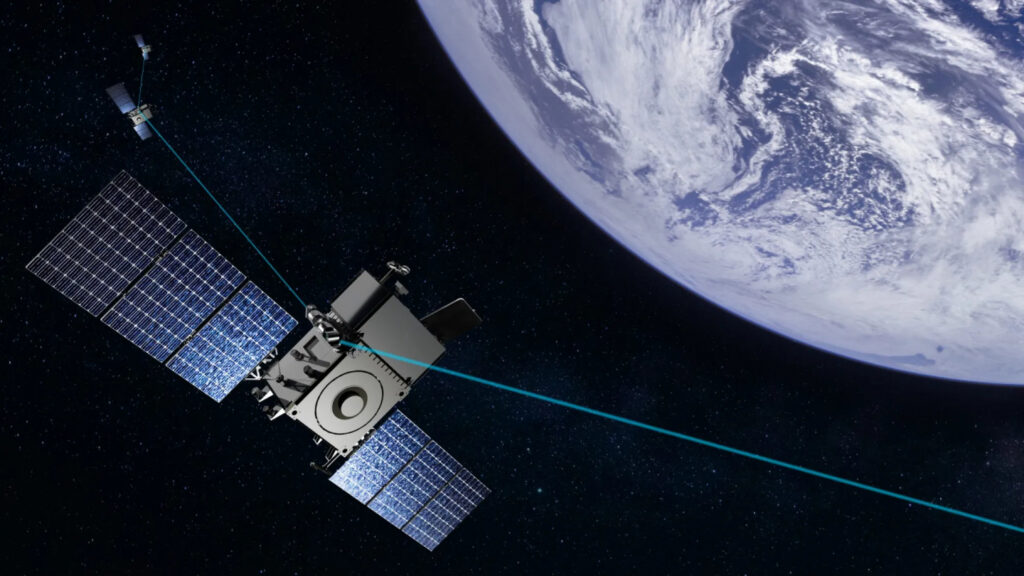
Space is a clear example. Satellites, positioning, navigation, timing, communications, imagery, missile warning, and space-based intelligence are central to both military operations and civilian life. They are also targets. Space is no longer only a supporting layer. It is part of the security system itself, and therefore part of the target set.
A country that depends on space but can’t protect access to its space services is vulnerable. An alliance that relies on shared awareness yet can’t protect its data links is vulnerable. A military that is dependent on precision but can’t operate through disruption is vulnerable.
The same is true in cyber. A country may have capable armed forces that are skilled in operating in the cyber realm, but if its ports, energy networks, banks, hospitals, communications networks, or government systems are vulnerable, national power can be weakened before the first shot is fired.
The same is also true of data. A country may collect information, but if it can’t trust the data, protect it, move it, and turn it into insights along with decisions, then information becomes noise.
The future battlefield will not be limited to air, land, sea, and traditional military cyberspace. It will include supply chains, satellites, software, public opinion, financial systems, data centers, energy networks, and infrastructure nodes that were once treated as civilian background.
The security question is therefore changing.
It is no longer only, “Can we defend the front line?” It is also, “Can we defend the system that allows the front line to function?”
Resilience as Strategic Endurance
Resilience is often misunderstood as the ability to absorb damage.
That is only part of it.
Resilience is the ability to continue functioning, adapting, communicating, and deciding under pressure. It is the ability to keep the national system alive while a crisis unfolds.
This includes infrastructure, energy, communications, logistics, health systems, financial systems, emergency services, public messaging, social cohesion, and political legitimacy. It includes the ability to explain the stakes to citizens and sustain public resilience when costs rise.
Public legitimacy is not an afterthought. In a long-term crisis, it becomes part of national endurance.
The Middle East demonstrates this reality every day. Missiles, drones, proxies, terrorism, cyberattacks, maritime disruption, energy flows, disinformation, great-power competition, domestic politics, and public legitimacy all interact at once. A military response may be necessary, but it is not enough. A country must also protect essential and critical services, sustain public resilience, prevent panic, preserve strategic discipline, and avoid overreaction.
Europe shows the same lesson in a different way. Civil preparedness, military mobility, energy security, industrial production, and political unity are not separate from defense. They are part of readiness.
The same lesson is shown in the Indo-Pacific across distance. A base that can’t survive, a port that can’t operate, a cable that can’t be protected, or a supply route that can’t be sustained may weaken deterrence before conflict begins.
Resilience is therefore not only defensive. It is strategic.
A resilient country is harder to enforce. A resilient alliance is harder to divide. A resilient society gives leaders more time, more options, and more legitimacy. It makes an adversary doubt whether pressure will achieve the desired result.
That doubt is part of deterrence.
Partnerships as Working Systems
No country can build an integrated power on its own.
Even great powers need partners. Smaller and medium-sized countries need them even more. But the meaning of partnership is changing.
The old language of diplomacy emphasized alignment. The new diplomacy of security is about function.
Can countries act together when pressure arrives? Can they share intelligence, move forces, sustain systems, protect networks, use infrastructure, coordinate messaging, and maintain political unity when costs rise? Can they prepare before the crisis rather than improvise after it begins?
These questions now matter as much as declarations of friendship.
Alliances continue to be essential. But alliances that can’t operate under pressure are incomplete. A promise that can’t be executed quickly is not enough.
This is why security diplomacy must become practical. It must connect strategy to industrial capacity, procurement to operational need, intelligence to decision-making, and national resilience to political legitimacy.
This work reaches far beyond foreign ministries. It includes ministries of defense, finance, energy, transportation, industry, technology, intelligence, and homeland security. It includes companies, universities, infrastructure operators, investors, local governments, and civil society.
That may be uncomfortable. It is also unavoidable.
A crisis will not respect bureaucratic boundaries. It will move across military, economic, technological, informational, and political systems simultaneously. Diplomacy that remains ceremonial will not be enough. Diplomacy must become operational.
The test of a partnership is whether it changes reality.
Does it create capability? Does it reduce dangerous dependence? Does it meet the production needs? Does it build trusted data-sharing? Does it improve logistics? Does it enable access? Does it strengthen public resilience? Does it help countries act together under pressure?
If it does, it is part of integrated power. If it does not, it may only be theater.
Smaller Countries as Strategic Nodes
The new race for security is not only for great powers.
Smaller and medium-sized countries can’t match the scale of the United States, China, Russia, or large European powers. But in a connected security environment, scale is not the only measure of relevance.
A smaller country may control a key port, an air corridor, an undersea cable landing point, a logistics route, a cyber capability, a defense-industrial niche, a drone industry, a rare mineral, a repair hub, a data center, or an essential intelligence position. It may provide political legitimacy, regional access, public resilience, or a model of national preparedness that others need.
In a networked security environment, value is not measured only by size. It is measured by function.
The question for smaller countries is not whether they can do everything. They can’t. The question is whether they know what others need that they can do.
Strategic relevance comes from specialization, resilience, speed, and integration. It comes from being useful before the crisis, not only asking for help after it begins.
But this requires discipline.
Smaller countries must avoid becoming passive consumers of security. They must also avoid trying to build every capability at once. The more effective path is to identify the few areas where geography, industry, technology, society, or diplomacy can create leverage.
They must ask hard questions.
What should never be outsourced? Which dependencies are dangerous? Which partners are reliable? Which capabilities create influence? What can be built locally? What should be co-produced? What must be protected at all costs?
In the new race for security, smaller countries that answer these questions clearly can become strategic nodes in larger systems. Those who do not may remain exposed.
The Seven Tests of Integrated Power
The new race for security can therefore be reduced to a set of practical tests.
First, can a country see clearly? Can it detect early warning, connect information, understand adversary behavior, and avoid strategic surprise?
Second, can it be decided quickly? Can leaders act before confusion becomes paralysis and before adversaries exploit delay?
Third, can it produce and sustain? Can industry, procurement, logistics, and workforce systems keep capability alive under pressure?
Fourth, can it protect the foundations? Can it secure infrastructure, energy, data, communications, supply chains, and public resilience?
Fifth, can it operate with partners? Can alliances and coalitions move from statements to shared action?
Sixth, can it adapt? Can institutions learn, adjust, and integrate new technologies faster than threats and challenges evolve?
Seventh, can it maintain legitimacy? Can the country explain the stakes to its citizens, sustain political unity, and preserve confidence during a long crisis?
These are not separate questions. They are questions asked in seven ways.
Can national power function as a system before the crisis arrives?
Conclusion: Power Belongs to Those Who Can Connect It
The new race for security does not begin when a crisis erupts. It begins long before, in the foundations countries build in advance: industry, supply chains, intelligence, infrastructure, alliances, decision-making, and public resilience.
Conflict may reveal the race, but preparedness determines who is ready for it.
The old model treated defense, industry, intelligence, technology, infrastructure, diplomacy, and public resilience as separate fields. That separation no longer fits today’s security environment.
Missiles can expose industrial weakness. Drones can reshape procurement. Maritime crisis can affect global markets. Cyberattacks can weaken public resilience. Satellite disruptions might affect military operations and civilian life. Supply-chain cutoffs can become coercion. Information campaigns can weaken deterrence without a battle.
Security is now integrated because threats are integrated. The response must also be integrated.
This does not mean every country must become a fortress. It does not mean every democracy must militarize its society or close itself off from the world. It means countries must understand that freedom, prosperity, sovereignty, and security depend on systems that are prepared, protected, connected, and trusted before pressure arrives.
The future will not be determined only by those who spend more, possess more, or promise more. It will be determined by those who integrate better.
In the new race for security, the strongest countries will not simply be those that possess the most power. They will be those who can connect the spheres of power, military, industrial, technological, intelligence, economic, diplomatic, and civil before the crisis arrives.
Acknowledgement: The author is grateful to Dr. Dror Harel for her thoughtful comments, professional insights, and analytical support throughout the development of this eight-part series. Her perspective helped sharpen the analysis and strengthen the strategic foundation of the series.
Omer Haim is a Distinguished Fellow at the Gold Institute for International Strategy, a Washington D.C. based foreign policy and defense think tank.