Iraq’s PMF Law Is a Red Line—The U.S. Must Respond Forcefully

Iraq’s parliament is pushing forward a dangerous piece of legislation that would turn the Iran-backed Popular Mobilization Forces (PMF) into a permanent part of the state. The law would formalize the group’s military structure, create a dedicated academy, and promote its leader—who’s under U.S. sanctions for human rights abuses—to ministerial rank. It’s a move that would not only legitimize a powerful, Iranian-aligned armed force within Iraq’s official security system but also deepen Iran’s hold over the country’s institutions.

The PMF was originally formed in 2014 to help fight ISIS, but it has since evolved into a sprawling network of over 70 factions, including several that Washington designates as terrorist organizations. These militias have attacked U.S. forces, killed civilians, threatened religious minorities, and even launched drones at neighboring countries. Yet Prime Minister Mohammed Shia al-Sudani, backed by the Iran-aligned Coordination Framework, continues to support the bill—claiming it will bring the PMF under state control. In practice, it would do the opposite: protect them from oversight and further empower Tehran’s proxies.

The U.S. has every reason to be alarmed. Institutionalizing the PMF would effectively formalize Iran’s military presence inside Iraq, undermining the fragile sovereignty that Iraq still claims and throwing regional stability into further uncertainty. If this bill becomes law, Washington cannot afford to treat it as just another diplomatic concern—it must respond with clarity and force. That starts with accelerating the withdrawal of U.S. troops from the Arab parts of Iraq, where American forces are increasingly exposed and unwelcome.

But withdrawal alone isn’t enough. The U.S. should hit PMF-linked companies with new sanctions, publicly release intelligence documenting militia abuses, and make it clear that political and economic engagement with Baghdad will come at a cost. Prime Minister Sudani’s long-sought visit to Washington should be taken off the table. And as Iraq drifts closer to becoming a client state of Iran, the U.S. should deepen its ties with more trustworthy allies by establishing a permanent military presence in the Kurdistan Region—a place where American interests and local leadership still align.

Nahro Zagros is a senior fellow at the Gold Institute for International Strategy, a Washington, DC based foreign-policy and defense think-and-do-tank.

Trump ‘The Disruptor’ secures America First trade deal with EU

(This article first appeared in Human Events: https://humanevents.com/2025/08/05/shea-bradley-ferrell-trump-the-disruptor-secures-america-first-trade-deal-with-eu)

As Trump rebalances America’s relationship with the European Union, European leadership will be forced to correct their self-destructive policies and stop taking America for granted.

Economic “threats” and “bullying” are how the mainstream media and the allegedly “informed” foreign policy establishment describe President Donald Trump’s recent trade deal with the European Union (EU). Bullying?

I guess it doesn’t matter that U.S. companies have been burdened for decades with a multitude of tariffs, barriers, and protectionist policies that keep U.S. goods out of European markets, or that the EU has a goods trade surplus with the U.S. of $236 billion, or that European Commission President Ursula von der Leyen even said herself that the deal was necessary to “rebalance trade.” President Trump continues to deliver for “America First,” and his critics can’t stand it.

Trump is rectifying what decades of former Presidents would not. After years of slashing our own tariffs and trade barriers, all while paying the price (literally) for ever-increasing foreign protections against U.S. products, Trump is finally giving U.S. companies a level playing field. Besides handicapping U.S. companies and workers, the U.S. trade policies that first focused on rebuilding Europe after WWII, then on nurturing developing countries all over the world, created a U.S. global goods trade deficit—currently valued at $1.2 trillion (2024), the highest on record. The last time the U.S. even had a trade surplus was in 1975.

The EU has a significant surplus in trade with the U.S. in goods that are also made in America—like pharmaceuticals and medical devices, and motor vehicles and parts. Did Trump get the better deal with von der Leyen? Yes, he did. The U.S. will now impose 15% tariffs on most EU goods, including cars, but U.S. tariffs on the same goods will be zero.

Early on, von der Leyen played games with Trump and threatened even higher tariffs on the U.S instead of negotiating—and it backfired on her. Von der Leyen’s moves weren’t smart: the U.S. buys more exports from the EU than any of its trading partners, and the EU desperately needs U.S. markets.

This is particularly true, especially because Europe’s economy has been in steady decline—and it’s their fault. Gross Domestic Product (GDP) in Europe used to be 90% of America’s GDP, ten to 15 years ago, but has declined to only about 65% of U.S. GDP. As JPMorgan Chase chief executive Jamie Dimon remarked, “That’s not good.”

European bureaucracy, which seeks to regulate its citizens extensively, has created a tax system that is excessively expensive and fails to protect new workers or incentivize industry and innovation. Instead of fixing these problems, EU leadership focuses on building a collective “war economy” around the Russia-Ukraine war, which aims to keep the war going indefinitely.

In addition, Europe built its economy on cheap Russian energy. Before the Russia-Ukraine war, Russia provided the EU with more than 50% of its solid fossil fuels (like coal), more than 25% of its crude oil, and 43% of its natural gas. But Russian President Vladimir Putin isn’t a business partner you can count on and has repeatedly weaponized energy supplies to circumvent sanctions. In the first 9 months of the war, and even before it started, Putin strategically cut gas supplies to the EU and then shut down the Nord Stream 1 pipeline, causing a severe European energy crisis—gas prices soared, inflation crippled state economies, workers lost jobs, and industries shut down.

Remember when Trump warned the Germans against reliance on Russian energy at the United Nations General Assembly (UNGA) in 2018? German officials actually snickered and laughed at him. Von der Leyen’s agreement to purchase $750 billion in U.S. energy as part of the U.S.-EU trade deal is a big win for both sides, and so is her agreement to invest another $600 billion in U.S. companies.

Though some doubt their ability to do so, the EU will also purchase “hundreds of billions of dollars’ worth of military equipment,” which can provide U.S. defense contractors with big business. At the same time, Europe gets the best military equipment in the world. And, perhaps it will also help them fulfill their NATO spending commitments.

Trump is challenging the global systems and disrupting the “status quo,” which blindly accepts that the U.S. will always pay higher tariffs than we impose and more than our fair share for NATO. Thanks to the disastrous policies of the Biden administration, the U.S. also, by far, bore the financial burden of the Ukraine war for three years.

As Trump rebalances America’s relationship with the European Union, European leadership will be forced to correct their self-destructive policies and stop taking America for granted. Hopefully, it will also push them toward a very serious restructuring of the EU’s economic and social welfare systems. The EU can no longer run a huge trade surplus over the U.S. while allowing its economy to be buried under bureaucracy, burdensome taxes, and woke regulations.

In the meantime, as part of the trade deal, the EU agrees to work with the U.S. to eliminate its heavy tariff and non-tariff barriers and protectionist policies, opening European markets to U.S. companies. U.S. barriers to some sectors have persisted for years “despite repeated efforts at resolution.” New markets can drive U.S. economic growth and add American jobs. Perhaps if the EU sticks to this agreement in good faith, Trump will eventually lower U.S. tariffs on EU goods.

Europe is our partner and ally, and U.S. trading goals should ultimately strengthen both Europe and our partnership. Countries like Russia, Iran, China, and North Korea are eager to tear us apart, destroy Western civilization, and weaken our collaborative security. But economic security and national security are closely linked, and these countries would also welcome U.S.-EU economic fragmentation.

In only a short time, Trump has used tariffs as a great diplomatic tool that leverages American economic power. He has refocused foreign aid and is building a foreign policy on ‘Peace Through Strength and Prosperity,’ at the same time reinvesting in American companies and our hardworking middle class. Don’t let the naysayers distract you— America is indeed headed toward a ‘Golden Age.’

Shea Bradley-Farrell, Ph.D. is a strategist in national security and foreign policy in Washington, D.C. and president of Counterpoint Institute for Policy, Research and Education. She is a senior fellow at the Gold Institute for International Strategy, a Washington, DC-based foreign policy think tank. Her latest book is Last Warning to the West. Follow her at counterpointinstititute.org or on “X” @DrShea_DC and @CounterpointDC.

Flynn’s Rules of Diplomacy for American Officials

I have never been a Diplomat, although at times had to be diplomatic. Even though I had interactions with the State Department during my 33 years in the U.S. Army, I really am not sure about how American diplomats are instructed to speak to or about other great powers, specifically the Russian Federation. What I hear coming out of the mouths of officials in both the Legislative and Executive Branches leads me to believe the American government has little to no standards. In my judgment, these comments are made to denigrate Russia, but they also degrade us as a nation. This is not how great powers should deal with each other. If there is a rulebook of diplomatic speech these people are following, it needs to be thrown out the window. The same is true about how we treat all other great powers. To what standard should we then hold ourselves?

Rather than proceed toward a nuclear standoff, my basic message is that all American officials must speak about and treat the Russian Federation and its President Vladimir Putin with the respect due a great power (and a nuclear power). As our nation inches toward a senseless and avoidable nuclear world war, I am willing to risk being criticized for weakness or naivety or anything else that the Deep State may choose. I don’t care.

These same forces already tried their best to destroy me when I was appointed as President Trump’s first National Security Advisor and tried to calm the waters with then-Russian Ambassador Sergey Kislyak. People forget now, but the Obama Administration lied about Russian hacking of the Democrat National Committee servers and the 2016 election, and unfairly expelled 35 Russian Diplomats on December 29, 2016. Among other topics I spoke with Ambassador Kislyak about was to urge him to not overreact, as a new Administration would be taking over soon. For this, I paid a heavy price. In one of our calls, the transcript reflects me telling the Ambassador, “you are not talking to a diplomat; you are talking to a soldier. I am a very practical guy. It’s all about solutions.” That is how I still feel. Perhaps that put a target on my back then, and perhaps it will now. So be it.

For the sake of reducing the risk of nuclear war, and for the sake of having decent relations with Russia, and for the sake of our children and grandchildren, this is a time for American officials to stop mouthing off at Russia like spoiled children. And, we must follow some basic rules about behaviors like not lying, cheating, and stealing. Many in Congress are probably impossible to control, but here is my effort to lay down the rules that I would urge we follow regarding how we speak about and treat the Russian Federation, its leadership, and most important, the people of Russia.

The Rules:

Rule #1. The U.S. should not lie.

I was head of the Defense Intelligence Agency. I know people lie. I know governments lie. The establishment press lies and the CIA lies. However, great world power leaders cannot lie to each other. I am not saying that the White House press secretary should answer questions about military operations or the like, or be required to give away all information in response to a question, but that is an entirely different matter. Lying between great nations never accomplishes anything except breaking the trust that great nations must have in each other.

It was before my time, but I remember studying the damage done to our relationship with the Soviet Union when President Eisenhower lied about the U-2 flight by Francis Gary Powers. I was a child at the time, but from studying history, I know that relations were harmed when President Kennedy lied about U.S. involvement in the Bay of Pigs invasion into Cuba. By the time the Cuban Missile Crisis occurred, Kennedy had turned the corner and was dealing straight with the Soviet leadership (at the time, Nikita Khrushchev). That tough, but honest, straightforward talk helped avert a World War.

Some may say that lying is part of the game. That everyone lies. Rubbish. I am reminded of the scene from the 1955 movie The Sea Chase where John Wayne played the captain of a German freighter trapped in Sydney, Australia at the outbreak of World War II. Wayne discusses strategy with the German Consul-General and tells him using his best cowboy drawl: “I won’t lie for you.” The German diplomat’s response is classic: “Of course not! I wouldn’t think of asking you to lie. You haven’t had the necessary diplomatic training.” Lies may be the currency of covert operations, but not the direct communications between great nation leaders. And these days, with much more sophisticated intelligence capabilities, our adversaries can figure out we are lying almost as soon as the lie is stated. We simply cannot lie to our adversaries.

Rule #2. The U.S. must not break its word.

In recent years, it has been proven that the U.S. promised Russia that if it allowed the dissolution of the Soviet Union, we would not expand NATO eastward. Secretary of State James Baker promised in 1990 that NATO would move “not one inch eastward.” West German Foreign Minister Hans-Dietrich Genscher repeated the assurances. But we lied. NATO expanded under President Clinton (Poland, Hungary, Czech Republic); under President George W. Bush (Estonia, Latvia, Lithuania, Slovakia, Slovenia, Romania, Bulgaria); under President Obama (Albania and Croatia); and even under President Trump, two small countries (Montenegro and North Macedonia) joined NATO. Russia consistently has pointed to the U.S. breaking its word with the eastern expansion of NATO as the principal reason it viewed the Ukraine as an existential threat. How might the lives of the people of the Ukraine be different if we had kept our word and NATO had not expanded?

Rule #3. The U.S. should not insult, demean, ridicule, or threaten.

When I heard President Biden call President Putin “a pure thug,” a “murderous dictator” and a “war criminal,” I cringed. John McCain used the same terms. Even then-Senator Marco Rubio called President Putin “a gangster” and “an authoritarian thug,” although those days appear to be over in his current role. Now, Secretary of State Rubio, a man with a lot on his plate, comes across as a diplomat of the highest order. Lindsey Graham has also called President Putin a “thug.” What good does this kind of sound bite do? Perhaps Graham believes that the voters of South Carolina want to hear such nonsense, but I think soon, he will find out that South Carolina voters have had enough of his stirring the pot of war.

On July 16, 2025, for reasons no one has explained, Army General Christopher Donahue suggested that the U.S. and NATO might invade the Russian city of Kaliningrad, a small city surrounded by Lithuania and Poland. Donahue’s remarks are highly provocative and should be cause for his removal. That said, as Donahue noted, “Kaliningrad, Russia, is roughly 47 miles wide and surrounded by NATO on all sides and the Army and its allies now have the capability to ‘take that down from the ground in a timeframe that is unheard of and faster than we’ve ever been able to do…. We’ve already planned that and we’ve already developed it. The mass and momentum problem that Russia poses to us … we’ve developed the capability to make sure that we can stop that mass and momentum problem,’ Donahue said.”

Not surprisingly, Russian lawmaker Leonid Slutsky responded to the threat to invade Russian territory. “An attack on the Kaliningrad Region will mean an attack on Russia, with all due retaliatory measures, stipulated, among other things, by its nuclear doctrine. The US general should take this into account before making such statements,” Slutsky said.

What possible positive outcome Donahue thought would come from a comment about invading Russia remains unexplained. Nor is it explained why Russia should act any differently from the way Americans would react if Russia threatened a naval invasion of Alaska’s remote Aleutian Islands.

Rule #4. The U.S. should never support assassinations.

I could use Lindsey Graham for several of these points about what not to do, but after the Russians moved into the Ukraine, Graham said, “The only way this ends is for somebody in Russia to take this guy out… You would be doing your country — and the world — a great service.” Such comments are a disgrace. Have we not had enough assassination attempts on President Trump that we still want to legitimize assassination of world leaders? President Reagan signed Executive Order 12333 in 1981 banning the assassination of foreign leaders. This must be enforced.

Rule #5. The U.S. should never call for regime change.

On March 26, 2022, President Biden said in Warsaw, Poland: “For God’s sake, this man cannot remain in power.” Neocon and former National Security Advisor John Bolton has said, “Putin must go: Now is the time for regime change in Russia.” Former U.S. Ambassador to Russia Michael McFaul has called President Putin’s government “illegitimate” and accused him of “war crimes.” And, McFaul is supposed to be a trained diplomat. How would we feel if President Putin called for the downfall of President Trump? None of this is acceptable behavior.

Rule #6. The U.S. should always be willing to negotiate.

I confess with my background growing up in an Irish Catholic Democrat family in Rhode Island that I have always had great admiration for President John F. Kennedy. As I have traveled the country giving speeches, I have often referenced President Kennedy, and sometimes drew strange stares from my conservative friends as a result. However, I believe he often gave us wise counsel, including his January 1961 inaugural address when he said: “Let us never negotiate out of fear. But let us never fear to negotiate.”

During the Cuban Missile Crisis, President Kennedy had to work around his own appointees, particularly at the Pentagon and the CIA, to establish a direct dialogue outside of normal channels with President Khruschev to resolve the crisis. It worked, and war was averted. Thank God he was willing to negotiate. From all appearances, it seems President Trump is attempting to do the same despite great pressure from the Neocon-Right and Left.

Rule #7. The U.S. should view this dispute from the other nation’s perspective.

Perhaps the most relevant illustration of this principle is the way many in our government view what the Russian Federation calls its Special Military Operation in Ukraine. The American people have been lied to incessantly that the Russian move was an unprovoked act of aggression. However, there is another side to this story as to why the Russian Federation believes it was forced to take the action it did, provoked by Western nations, including the endless expansion of NATO. But even if they refuse to face (or admit) the fact that there is another side to the story, our leaders need to have a moment of introspection. There is always another side to the story, even if it is not as persuasive.

Again, JFK explained this point much better than I ever could, this time in his American University Commencement Speech. He said,

But I also believe that we must reexamine our own attitude – as individuals and as a Nation – for our attitude is as essential as theirs. And every graduate of this school, every thoughtful citizen who despairs of war and wishes to bring peace, should begin by looking inward – by examining his own attitude toward the possibilities of peace, toward the Soviet Union, toward the course of the cold war and toward freedom and peace here at home. [Emphasis added.]

Rule #8. The U.S. should never back a nuclear power into a corner.

Here I go again, with another example of John F. Kennedy’s American University Commencement Speech:

Above all, while defending our own vital interests, nuclear powers must avert those confrontations which bring an adversary to (a choice of either a humiliating retreat or a nuclear war). To adopt that kind of course in the nuclear age would be evidence only of the bankruptcy of our policy – or of a collective death-wish for the world. [Emphasis added.]

It may make us feel good to try to humiliate the leader of a great country, but it is among the worst types of mistakes we could make given Russia’s nuclear arsenal.

Rule #9. We should never assume that only the U.S. wants peace.

One last time, JFK said at American University:

Among the many traits the peoples of our two countries have in common, none is stronger than our mutual abhorrence of war. Almost unique among the major world powers, we have never been at war with each other. And no nation in the history of battle ever suffered more than the Soviet Union suffered in the course of the Second World War. At least 20 million lost their lives. Countless millions of homes and farms were burned or sacked. A third of the nation’s territory, including nearly two thirds of its industrial base, was turned into a wasteland – a loss equivalent to the devastation of this country east of Chicago. [Emphasis added.]

In a 2025 poll, over 80 percent of Russians say their country should seek a closer relationship with the United States. The idea that Russians are irrevocably hostile to America is simply not true.

Rule #10. The U.S. should never steal.

After the Russian invasion of the Ukraine, the U.S. and its allies froze at least $300 billion in Russian assets, as well as property belonging to wealthy Russians. The G7 has proposed to use the interest earned on this money to fund the war against Russia. Is it any wonder that such treatment causes other countries not to trust us? Is it any wonder that other countries are motivated to create an alternative financial structure to avoid the West, such as BRICS? BRICS was created in 2006 by Brazil, Russia, India, and China, soon joined by South Africa (the nations’ initials created the BRICS acronym). BRICS “was designed to bring together the world’s most important developing countries, to challenge the political and economic power of the wealthier nations of North America and Western Europe.” Given how much we took of what belongs to others, should we be surprised when Russia looks for more trustworthy economic partners?

Some Concluding Thoughts

As the leader of a great country, would you have confidence in dealing with a nation which violated these basic rules of diplomacy? Would you be willing to negotiate with a nation which routinely showed disrespect? It is no wonder we are moving toward a nuclear conflict with Russia, the world’s other great nuclear power.

President Kennedy’s speech at American University explained that it is nuclear weapons which force us to pursue peace with all our energy:

I speak of peace because of the new face of war. Total war makes no sense in an age when great powers can maintain large and relatively invulnerable nuclear forces and refuse to surrender without resort to those forces. It makes no sense in an age when a single nuclear weapon contains almost ten times the explosive force delivered by all the allied air forces in the Second World War.

Our nation has seen endless wars for decades, but those wars have always been “over there.” A nuclear war would not be like that. As President Kennedy explained,

[War] makes no sense in an age when the deadly poisons produced by a nuclear exchange would be carried by wind and water and soil and seed to the far corners of the globe and to generations yet unborn.

It is time for our leaders to control their emotions. It is time to guard our tongues. It is time to show respect to our adversaries as well as our friends. If we behave with respect, perhaps then we could find a way forward with our adversaries.

So, if I were advising him now, I would urge President Trump to implement these 10 rules for the Executive Branch.

I urge the voters to reject candidates for Congress whose irresponsible rhetoric brings us closer to nuclear war.

And perhaps most importantly, I ask that all Americans pray for our elected and appointed officials, that God would give them the wisdom, the discernment, and the character required to lead our nation. For we are told to pray: “For kings and for all that are in authority; that we may lead a quiet and peaceable life in all godliness and honesty.” (I Timothy 2:2.)

I pray that if we demonstrate such an act of self-control, God would honor it, bring us back from the precipice of nuclear war, and protect the United States of America.

Michael T. Flynn, LTG USA (Ret.) is the chairman of the Gold Institute for International Strategy, a Washington, DC-based think-and-do tank.

The US-EU Trade Deal of 2025: A Pivot Toward Resilience, But at What Cost?

The US-EU Trade Deal of 2025: A Pivot Toward Resilience, But at What Cost?

The US-EU trade agreement of July 2025 is not just a recalibration of tariffs and quotas—it’s a bold acknowledgment that advanced economies are prioritizing national resilience over the dogma of unfettered globalism. In a world of weaponized supply chains and geopolitical flux, this deal reflects a pragmatic shift toward sovereignty, but its benefits and costs are unevenly distributed. For the United States, it’s a strategic win; for Europe, it’s a fragile compromise that masks deeper vulnerabilities.

A Triumph for the United States

For the US, the deal is a masterstroke of economic and geopolitical strategy. By securing increased access for energy exports—potentially worth hundreds of billions over the next decade—and attracting European investment in manufacturing and AI, the agreement bolsters key sectors. It’s not just about dollars. It’s about reversing decades of offshoring that hollowed out industrial heartlands. Towns in Ohio and Michigan stand to gain from reshored factories, supported by pro-business policies and cheap domestic energy. The deal also cements US energy dominance, with LNG exports to Europe projected to reach 25% of EU gas supply by 2030, reducing reliance on volatile suppliers.

Critics argue that tariffs risk inflation and higher consumer prices. They’re not wrong—US import prices could rise by 2–3% in the short term. But for many Americans, stable jobs and national security outweigh marginal cost increases. The working class, long sidelined by coastal elites chasing efficiency, finally sees policy aligned with their needs.

Europe’s Precarious Truce

Europe, by contrast, has secured a tactical reprieve rather than a strategic victory. By averting a tariff war, the EU protects its export-driven economies, particularly Germany’s automotive sector (€250 billion in exports annually) and Ireland’s pharmaceuticals. Zero tariffs on semiconductors and aviation preserve high-value industries, while increased US LNG imports support energy diversification, cutting reliance on Russian gas (down to 8% of EU supply in 2024). Yet these gains come at a cost. Europe’s industries face structural pressures: German manufacturers grapple with energy costs 2–3 times higher than in the US, while Central European suppliers risk losing ground to American competitors offering lower costs and subsidies.

Wealthier EU states like Germany and the Netherlands may absorb these shocks, but southern and eastern Europe—already strained by high debt (e.g., Italy’s 140% debt-to-GDP ratio) and lower wages—face growing risks. Rising living costs, with inflation at 2.5% in 2025, hit households hard, particularly in Greece and Romania, where real incomes have stagnated. The deal’s focus on large industries overlooks small and medium enterprises, which employ 60% of EU workers and struggle with trade compliance costs.

Moreover, the agreement deepens Europe’s dependence on US energy, trading one external reliance (Russia) for another. This is not sovereignty restored but deferred. The EU’s push for renewables under the European Green Deal—aiming for 45% renewable energy by 2030—offers a path to self-reliance, but progress is uneven, and the deal does little to accelerate it.

The Bigger Picture: Sovereignty, China, and Society

This deal is not about economic optimality; it’s about geopolitical realism. Tariffs and industrial policies may distort markets, but they build resilience in a world where supply chains are strategic weapons. Both the US and EU are responding to China’s dominance in critical goods like semiconductors and rare earths. A true transatlantic partnership would align on reducing China’s leverage, perhaps through joint investment in chip production or green tech.

The deal also sidesteps digital trade and data privacy, where US-EU tensions (e.g., GDPR vs. US tech giants) remain unresolved. Without progress here, the agreement misses a chance to shape the digital economy. Socially, Europe risks further fragmentation. Economic strain in southern and eastern member states could fuel populist movements, as seen in Italy and Hungary, undermining EU unity.

A Necessary but Incomplete Step

The US-EU trade deal of 2025 marks the end of naive globalism and the return of strategic pragmatism. For the US, it’s a step toward industrial revival and energy dominance. For Europe, it’s a pause that preserves stability but exposes long-term vulnerabilities. To compete, the EU must double down on self-reliance—through affordable energy, diversified supply chains, and support for SMEs—while addressing social discontent to prevent political fracturing.

Economic inefficiencies may arise, but in a world of strategic decoupling, sovereignty is not a luxury—it’s a necessity. The US has seized this moment; Europe must find the courage to do the same, lest it remain a market bloc tethered to external powers. This deal is not the final chapter but a call to action for both sides to redefine prosperity in an age of uncertainty.

Rob Roos is a distinguished fellow at the Gold Institute for International Strategy, a Washington, DC-based think-and-do tank.

Kurdistan-Born, Hollywood-Made: The Story of Akam Rezaee

When Akam Rezaee talks about cinema, there’s a fire in his voice—a blend of passion, purpose, and persistence. Born in Mahabad, in the heart of Rojhelat (Eastern Kurdistan), Akam didn’t grow up with film schools, industry connections, or cutting-edge equipment. But what he did have was curiosity—and a fierce drive to tell stories. Today, he’s a VFX Supervisor and filmmaker whose credits include productions for Netflix, Apple TV, Showtime, and Paramount, as well as projects produced by Tom Hanks and Steven Spielberg.

We caught up with Akam to talk about how he went from a handheld camera in the Kurdish underground music scene to contributing to some of the biggest productions in Hollywood.

No Film School? No Problem.

“There was no place to study filmmaking in my hometown,” Akam says.
“So we just started shooting.”

With borrowed camcorders and sometimes even phones, Akam began making music videos for local artists and short films with friends. His raw but inventive style quickly stood out. His work introduced storytelling, lighting, and even visual effects into a regional scene where none of that had been done before.

“I wouldn’t say I invented anything,” he says, smiling.
“But I do think I helped push our scene forward—visually, emotionally, technically.”

The Road to America Wasn’t a Red Carpet

Akam’s journey wasn’t just creative—it was political. He spent years as a refugee in Turkey before finally receiving asylum in the United States. But the dream of Hollywood wasn’t waiting with open arms.

“When I got here, I felt like I was 100 steps behind everyone else. I didn’t go to school here. I didn’t know anyone. I went to every event, messaged anyone I could—even total strangers. It was exhausting—and for a long time, it felt hopeless.”

But he didn’t stop. Instead, he looked for an edge. That’s when he found Gnomon—one of the most respected visual effects schools in the world.

A New Language: VFX

“I realized VFX was something that every film and show needed. And I already had a passion for it—but now, I wanted to master it.”

Gnomon became the turning point. Through technical discipline and sheer persistence, Akam broke into the VFX industry. He went from learning the software to delivering shots for indie films, studio features, and high-end episodic TV.

“Eventually, I got to work on some incredible projects—films produced by Spielberg, by Tom Hanks, by major streamers. It still feels surreal.”

VFX Supervisor and Storyteller

Today, Akam splits his time between supervising visual effects and pushing toward his dream of directing. His work includes everything from photoreal set extensions and car crash sequences to subtle compositing and CG integrations.

“To me, good VFX should feel invisible. If it breaks the story, it fails. But if it enhances it—emotionally, visually—that’s the magic.”

Akam has also served as a jury member for the Duhok International Film Festival, specifically in the Kurdish feature category—bringing both his technical expertise and his passion for storytelling back to his roots.

Giving Back to Kurdish Cinema

Despite his Hollywood résumé, Akam hasn’t turned his back on where it all started.

“I rarely see high-end VFX, color grading, or cinematic technique used in Kurdish cinema. Not because there’s no talent—there’s tons—but because there’s no access. That’s why I want to give back. Bring what I’ve learned here back home.”

He’s also produced films with longtime friend and collaborator Apo Bazidi, a filmmaker he credits as a major supporter.

Still a Student of Cinema

Even with years of professional experience, Akam doesn’t see himself as finished. Not yet.

“I always say I want to learn every piece of the puzzle. Every department. Because when I finally step fully into directing, I want to speak the full language of cinema. Not just the dialogue—but the camera, the rhythm, the light.”

Rahim “Mr. Kurd” Rashidi is a media fellow of the Gold Institute for International Strategy, a Washington, DC-based think-and-do tank.

Trump Lays the Witch Bare

European Union flags waving in front of the European Commission building in Brussels

(This article was written by Hermann Tertsch and appeared in El Debate. Trump desnuda a la bruja)

It would be funny. After all the mockery this European Commission and its president Ursula von der Leyen have directed at the US and all the insults they have hurled at its president Donald Trump, we may be given the amusing and certainly comforting paradox that it should be the greatest act of submission to Donald Trump ever seen on the international stage that finishes off this European Commission, with the lady president leading the way.

The humiliation at Canossa of the Germanic emperor Henry IV looks like a joke compared with that visit by von der Leyen to the premises of one of the golf clubs owned by Trump in Scotland, to say yes, yes, yes and yes to President Trump on every one of his demands. Some of them are impossible to fulfil and many are not remotely within the competence of the European Commission, and its president has absolutely no power to grant them.

Neither the astronomical European investments nor the purchases of North American energy fall within the competence of this lady, whom they called “the Queen of Sheba” when a year ago she made her second Commission to her own measure, with Teresa Ribera and a whole series of people with cupboards full of skeletons. But whom everyone, even those closest to her, considers more witch than queen.

Von der Leyen, who is a “doberman” in her mistreatment of all the conservative and patriotic forces that are critical of her demented ideological, environmental, economic and international-relations policies, turned in Scotland into a lapdog of the owner of the golf course, of the negotiations and of the discourse. It is clear that Trump enjoyed the run-around he gave this lady, who declared herself delighted with everything.

The 27 leaders of the member countries, who were not consulted about the steps she was taking, something very habitual with her, heard and read, some with horror and the rest with ill-disguised apprehension, the conditions that Trump enumerated with relish.

Trump has once again done the world a great favour, one more, and it has been to make clear even to the most faithful devotees of “suicidal Europeanism” that von der Leyen is a public danger, not only to democracy and freedom, which many do not care about, but to their own pockets and to their standing before their own electorates. Thus it has been shown once again that the groups to the right of von der Leyen’s People’s Party are right. And Mrs Ursula now has serious problems. As Viktor Orbán said, Trump’s heavyweight has had the featherweight for breakfast, a featherweight that is only proud, arrogant and abusive with the weak who live under her tyranny. And under her permanent abuse of power and of competences that are not her own.

On 10 July last in Strasbourg, the president of the European Commission managed to survive a motion of censure but she certainly did not emerge unscathed. The 175 votes in favour of her censure and fall, the 360 against and 18 abstentions saved her political neck, but they do not tell the whole story, because missing from them are 155 votes of deputies who, though present in Strasbourg, absented themselves so as not to vote.

Even on that day Mrs Ursula was very short of support. Today she would probably be far shorter of it, and it should no longer be surprising if, should things go a little more awry for her, she faces a much more matured and coordinated motion this autumn. With a far more uncertain outcome.

Because the agreement with Donald Trump may in fact become the final catastrophe of this German politician overrated to the point of the ridiculous. After failing resoundingly in three ministries in the German federal government, she reached the presidency of the European Commission through a manoeuvre by the ineffable Emmanuel Macron and after beheading the Spitzenkandidat, Manfred Weber, and some other candidates.

She has shown that she lacks scruples and the least empathy with the citizens of the European nations she mistreats. She has also had an instinct for power, a capacity for intrigue and arrogance more than enough to make herself strong, as she has done through a very determined use of the reins of the bureaucratic monster. But now she has crossed paths with Donald Trump and the Queen of Sheba has been left naked and utterly ridiculous. And that is the most difficult thing to survive in politics.

Hermann Tertsch is a Distinguished Fellow (Honorary) at the Gold Institute for International Strategy, a Washington D.C.-based foreign policy and defense think tank.

Why I believe Washington, DC is still the modern world’s Capital

Why I believe Washington, DC is still the modern world’s Capital

When I visited the US for the first time ever in my life in 1993 as a young officer for training at Fort Bliss, TX, among Americans and international officers, I was touched by the culture and civilization of a diverse nation, particularly when I met my host family, who were a World War Two veterans’ family. Through this family, I saw the ideal American strong society, which reflects the values of the USA.

Democracy, Individual Freedoms and Rights
Fundamental rights such as freedom of speech, religion, and the press—these values are the cornerstone of American society’s strength.

Along with technological advancement and economic growth, the U.S. is known for its cultural diversity, with people from various ethnic, religious, and cultural backgrounds contributing to its identity as a melting pot.

American values—liberty, equality, and the pursuit of happiness—are central to the American ethos. The U.S. global influence and leadership play a significant role in global politics, economics, and diplomacy. Also, the U.S. military and strategic influence maintain a strong military presence and strategic alliances around the globe.

These pillars collectively shape the identity and functioning of the modern American nation. To be honest, I found this spirit when I attended the GIIS last conference, met with leaders, ambassadors, diplomats, politicians, media, fellows from around the globe—all came to Washington DC, hoping and knowing that their voices will be heard and their thoughts will be considered. Thanks to the GIIS leadership for these achievements.

MG Mahmoud Hassanin (Egypt Army – Retired) is a distinguished fellow at the Gold Institute for International Strategy, a Washington, DC-based think-and-do tank.

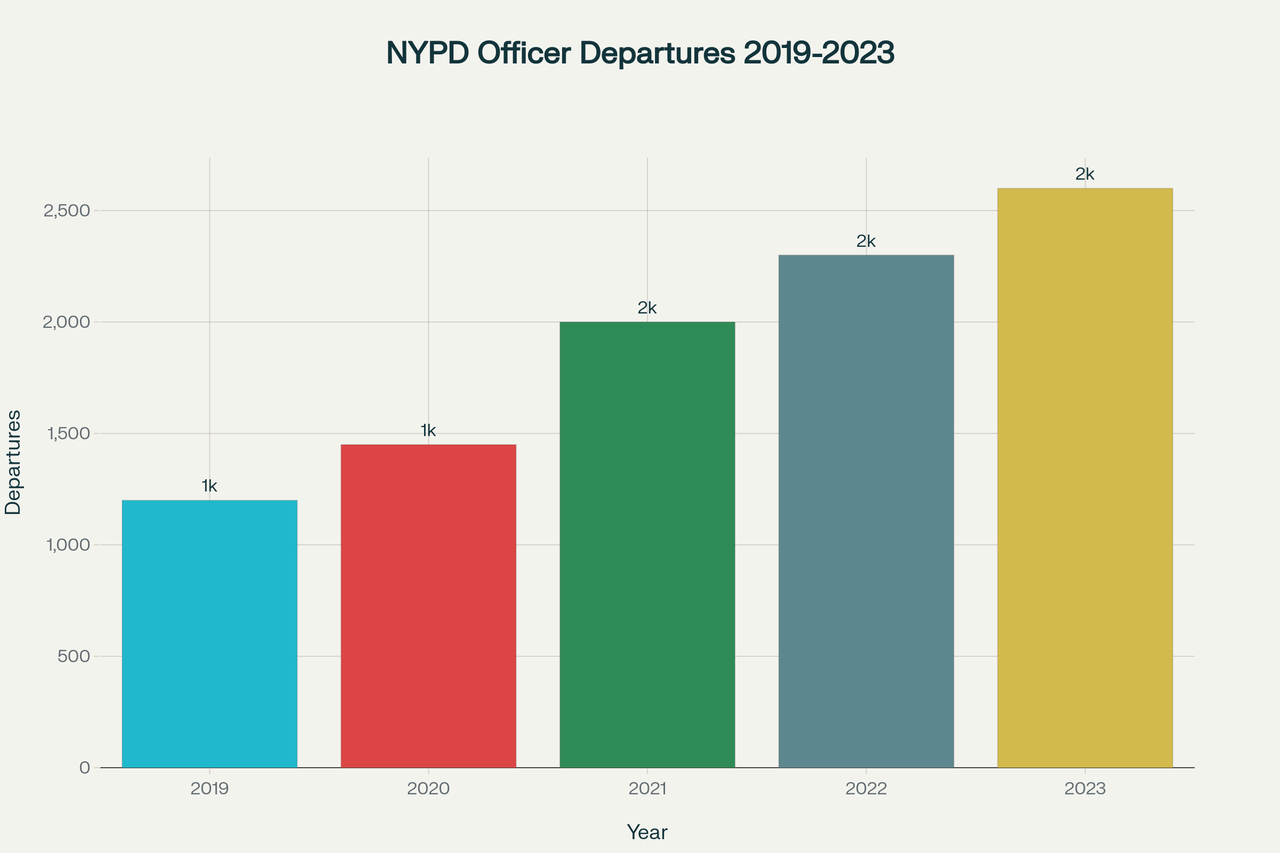
NYPD’s Strategic Response Group Response’s Underscores Dangers of Defund Proposals

The active shooter incident in Midtown Manhattan on July 29, 2025 by Shane Tamura has put a magnifying glass on Mamdani’s defund the police policy and, at a broader level, the continuing erosion of support for law enforcement in America. Since George Floyd’s death after his arrest on May 26, 2020 in Minneapolis, MN, the nation’s far left leaders used his death to supercharge their historical narrative of police brutality and law enforcement is inherently racist. They are committed to use this as one of their political tools. Many left wing politicians have seized on this as an opportunity to advocate and in some instances, condone the anti-police movement. Worse, law enforcement has been defunded, vilified and forced to work with fewer resources. Unfortunately, violent demonstrations in many major cities amounting to billions of dollars in damage have resulted.

With this backdrop, law enforcement at both the local and federal levels struggle for support from law makers and the public. The men and women in BLUE in this country are now forced to justify their once lauded public service as a vital pillar of the nation’s communities against the left’s misplaced and short-sighted ideology seeking to placate an uneducated constituency.

This recent active shooter incident in New York City, once again, brings light to the critical importance of a fully supporting the men and women of the New York City Police Department. Despite Trump’s re-election and the GOP taking the House and Senate, the anti-police and anti-ICE headwinds remain strong.

Democrat nominee for New York City Mayor, Zohran Mamdani’s policy of defunding the NYPD and reducing its ranks is not just misguided, it’s reckless. In fact, it’s such a bad idea that even the NYC Sanitation Department would toss it out with trash. Where is the common sense in stripping away the very institution responsible for maintaining public safety and supporting those officers working the streets?

Policing is inherently local. In a city as complex and vibrant as New York, the NYPD is the backbone of our quality of life, economic vitality, and community stability. Without it, the city risks descending into chaos. Mamdani wants social workers to fill the NYPD. Social workers have a vital role, but they are not equipped to respond to active shooter situations or violent crimes. Expecting them to replace trained officers in high-risk scenarios is not just unrealistic, it’s dangerous. Mamdani wants to do away with Strategic Response Group (SRG), the very unit that responded to the active shooter incident. SRG specializes in civil unrest, riot/protest control, active shooter among other policing duties. Why is Mamdani so against SRG? Is it because these police are trained in the use of long guns? Wear protective gear on their person that is used to protect them against criminals that use guns against police? Doesn’t Mamdani realize that SRG units and patrol officers tend to be younger in time on the job and eventually end up as detectives in a numbered squad, Special Victims Unit, Homicide, etc.

These policies, rooted in ideological extremism, ignore the reality of life on the streets. Criminals don’t care about laws or consequences. They prey on the vulnerable. Weakening the NYPD only emboldens them. Mamdani’s approach would continue to turn New Yorkers into prey, leaving them defenseless in the face of rising violence. Mamdani speaks about utopia, just as Karl Marx spoke and wrote about the state being equal for all. Except the perpetrators are not equal and deserve their due in the justice system.

Let’s be clear: elections have consequences. If voters continue to support candidates who push anti-police agendas, they must also accept the outcomes—more crime, less safety, and a diminished quality of life. Just look at the results in districts like AOC’s in Queens. Are these policies truly working for the people on the ground?

It’s time for common sense to prevail. New York City needs strong, courageous officers, not fewer of them. It’s the voter’s responsibility and accountability to demand and support the men and women in BLUE. Politicians are sound bites and appeasers to either gain or retain power. Mamdani is neither a politician nor a person for the people. His policies speak for themselves.

The deeper problem with the Mamdani movement is the left’s leaders are strategizing ways to leverage his momentum to regain power—not only in New York but in other blue sates and beyond. This urgent threat is not confined to New York–look at Chicago, Los Angeles and San Francisco.

Marc Black is a Senior Law Enforcement Fellow at the Gold Institute for International Strategy. He is a retired Detective Investigator from the New York City Police Department (NYPD), where he built a distinguished career spanning counterterrorism, arson and explosion investigations, computer crimes, and intelligence.

J. Lawrence Cunningham is a Senior Fellow at the Gold Institute for International Strategy. He is a retired United States Secret Service Agent, where his 20-year career encompassed supervisory roles in all aspects of Secret Service jurisdiction.

A Look Forward Toward Energy Security

Power plant with cooling towers and smokestacks representing European energy infrastructure

Ladies and gentlemen,
Affordable energy is on top of everyone’s mind and that is understandable.

Energy is life. Energy is food. Energy is warmth. Energy is economic growth. Energy is order. Energy is civilization.

Without affordable energy, we have hunger, cold, economic decline, disorder and the end of civilization.

Energy is not only only a matter of national security, it’s a military warfare strategic weapon
So, why is the European Union obsessed with climate change? Doing an energy transision that is impossible according the law of physics. To be honest: I really don’t understand. I’m still puzzled. Carbon, is not a poison gas like the left liberals wants us to believe. CO2 is the very fertilizer that feeds our crops. It is the food of our food.

And the EU is responsible for only 6% of global emissions. So we don’t make any impact and still we spend trillions of euros on it.

In my view, it’s less about environmental necessity and more about advancing a broader UN-led agenda (the Sustainable Development Goals). Unelected bureaucrats seize ever-greater power and a small circle of green-tech investors reap enormous profits—paid for by the hard-earned taxes of ordinary EU citizens. But that, of course, is a conversation for another day.

The European Union relies heavily on imported natural gas— 88 percent of its 2024 supply came from non-EU sources. Of that, roughly 63 percent arrives via pipeline, chiefly from Norway, Algeria, Libya and Azerbaijan. The remaining 37 percent is shipped as LNG, half of which originates in the United States.

Why didn’t the EU Member States scale up?: Former NATO secretary general Rasmussen warned the West in 2014 already about sophisticated information and disinformation operations of Russia. Russia engaged actively with German environmental NGO’s working against shale gas—to maintain dependence on imported Russian gas. Unfortunately no one listened, and Russia was very successful.

In 2020 Russia exported nearly three times more gas than Europe produced. What is amazing is that Europe increased its reliance on Russian gas even after Gazprom repeatedly suspended

pipeline exports to Ukraine. Germany’s response was to build the Nord Stream 2 pipeline to make itself less dependent on gas flowing through Ukraine.

The Biden Administration: ally or enemy?
The US fracking boom of the late 2010s had created a massive surplus of natural gas, causing the Henry Hub spot-market price to fall below $6 per megawatt-hour by the early 2020s.

The US fracking industry — funded to the tune of billions of US dollars by the financial sector
— and, as a logical consequence, significant parts of the US financial system were on the verge of bankruptcy in view of this price development. This is because these investments were made with minimal equity but large amounts of debt.

The only way to prevent this impending collapse was to expand into the EU market, particularly targeting Germany, the largest natural gas importer in the region with an annual demand of around 100 billion cubic metres.

However, before the onset of the war in Ukraine and the sanctions against Russia, US LNG was roughly seven times more expensive than Russian pipeline gas flowing into Germany, leaving Germany and its industrial sector with little incentive to choose American gas. Under normal, rational decision-making, such a switch would have been entirely illogical.

The Nord Stream 2 terrorist attack changed that completely. So, there were strong reasons for the US to sabotage the Nord Stream 2 pipeline. Biden himself also said he would do it if Russia would invade Ukraine. And then it happened.

In comparison to the $6 per megawatt-hour in early 2020’s, as of mid-December 2024, the spot market price in Europe for natural gas in the EU reached a peak of more than $350 per megawatt-hour. Almost 60 times more expensive. That had a huge impact on the EU’s economy and it’s competitiveness. That was a peak, the price has come down but it is still way more than than before the attack on Nord Stream 2 pipeline.

Meanwhile, the European Commission embraced “energy austerity”. Which increased the crisis. Europe is squeezed. Policies aimed at reducing both production and consumption have driven costs upward, spurred industrial flight out of the EU, and raised the specter of blackouts that were once unthinkable. It happened already in Spain.

My view on this situation, is that we must chart a course that balances affordability, reliability, and sustainability. The situation in Europe is really bad. Heavy industry is leaving Europe.

Steel production, chemical industry etc. We need to explore short-term relief—reopening mothballed fossil and nuclear plants—as well as long-term strategies: a true nuclear renaissance. We need technological neutrality in energy choices with market-driven innovation like small modular reactors.

The fact is that the European Commissions “communists” ideas of energy austerity is a myth. We need much more energy than we can imagine. And the reason is AI.

It’s time to move beyond ideology and climate hysteria, to follow facts and free-market ingenuity rather than rigid mandates. Only then can we secure the energy that is, quite literally, the lifeblood of our societies—and look forward with confidence rather than fear.

A Thousand Disguises of Tyranny

The Reichstag building in Berlin, seat of the German Bundestag, under a cloudy sky

(This article was written by Hermann Tertsch and appeared in El Debate. Mil disfraces de la tiranía)

Europe finds itself in a state of alarm, declared by nobody, but so taken for granted by so many that it gives rise to political operations extraordinary in their irregularity, in their audacity and in the immense dangers that many of them entail. The trial of strength between the social democratic majorities of the two traditional parties and the growing forces of the new right has entered a very virulent and bitter phase. The former, greatly alarmed by the trend the elections are marking, have decided that anything goes. With the political debate lost, the parties of the left, which see themselves threatened and cast as the great losers, are seeking to resort to extra-political methods in order to check adversaries they did not reckon with only a decade ago and who now dispute the majority and the power with them in more and more countries.

Under the protection and the funding of Brussels, the Popular and Socialist parties and their satellites are assembling every kind of extra-political mechanism to try to halt the “far right”. A term by which they in fact refer to all the conservative and national parties that do not go along with social democracy, with social engineering, with wokeism and gender ideology, and with climate change as a pretext for interference, controls and the curtailment of liberties. The methods used supposedly to defend democracy are mechanisms of tyranny and they do away with every elementary condition of a democracy. Beneath the banner of democracy there arise a thousand different disguises for tyranny, which seek to defend a system of a single ideology but one already in irreversible shipwreck.

In Poland, for example, the OP party of Donald Tusk, a member of the European People’s Party, which came to power thanks to massive interference by the European Commission and the Berlin Government, has allied itself with the left to form an antidemocratic, repressive and abusive Government absolutely comparable to the delinquent and unconstitutional Government of Pedro Sánchez with his socialists, communists and terrorist and coup-plotting allies.

In France the favourite to be president is disqualified from office, turning into a crime for that purpose what for hundreds of MEPs were in their day no more than administrative errors. In Romania they outright steal the presidency from the man who had won it, on the ridiculous and false pretext, soon forgotten, of Russian interference. And in fresh elections they install a perfect woke president who owes everything to Brussels, like Donald Tusk.

And in Hungary they are preparing, for next April’s elections, the umpteenth assault to try to finish off Viktor Orbán and put in his place a puppet of Brussels and of Germany, like Tusk once again, whose name is Peter Magyar and who belongs to the People’s Party, but who would govern with socialists and the far left. In Austria, Berlin and Brussels have prevented a right-wing Government led by the FPÖ party even though it won the elections by a wide margin and today almost doubles the second-placed party. From outside, a Government of the People’s Party with the dying losers of the Socialist Party was imposed.

Nevertheless it is Germany, logically, that is the setting for some of the most significant of these operations of social democratic and globalist bunkerisation aimed at trying to prevent the change of era and to ignore the popular will. Unheard-of things happen there. It is in Berlin that the latest episode reveals the strategy of the left throughout Europe. It is there that deputies of the traditional centre-right party, the CDU, of the European People’s Party, rebelled last week against an agreement by their leaders with the socialists to elect new judges of the Constitutional Court. They say they did so because one left-wing candidate is unbearably radical in seeking abortion up to the day of birth.

But beyond an act of rebellion against Chancellor Friedrich Merz for pursuing an election that is ethically unacceptable to them, what they in fact did was to block, for the moment at least, the assault on the Constitutional Court by an ever more radicalised SPD left, intended to cement by summary means a banning of the Alternative for Germany party (AfD), which has already comfortably passed 25%, in several states exceeds a third and in one comes close to an absolute majority.

The AfD, in continuous growth and expansion, is the only existing potential partner of the CDU for a conservative coalition and for a real change of course, not merely the cosmetic one of today. That radical change and liberating change of tack is what Germany needs in order to emerge from the degradation and the economic collapse imposed by the red-green ideology, thanks precisely to the complicity of the CDU, the party of Konrad Adenauer, Ludwig Erhard and Helmut Kohl, which under the disastrous Angela Merkel turned into another social democratic force like the SPD, harvesting conservative votes for social democratic and radical ecological policies.

The irruption of the AfD onto the political stage has radically changed the situation. Logic dictates that when this latest attempt at a coalition between the SPD and the CDU, with a policy indistinguishable from that of left-wing governments, fails, the cadres of the CDU will opt to break the cordon sanitaire around the AfD. The vote against the left-wing judge was a first stirring in that direction and against a chancellor locked in an embrace with the SPD. Once that antidemocratic veto on an alliance with the AfD, self-imposed under pressure from the left, is broken, they could move towards that grand alliance of the German right which today already commands an immense majority, in a CDU-AfD or AfD-CDU coalition. Banning the AfD, which is practically impossible without a very militantly left-wing Constitutional Court, would leave Germany without an alternative to governments of an ever more radical, intolerant and irrational left. And the CDU would be condemned to be a party held prisoner or a satellite of a systematic left-wing majority within an already socialist system. And a majority of the voting population, that of the AfD or of the alliance with the AfD, would be definitively outside the system.

The unheard-of uprising of the CDU deputies against Chancellor Friedrich Merz, in refusing on Friday to vote for the radical socialist candidate Frauke Brosius-Gersdorf, has blocked that whole process. The rebels insist that it is because of this candidate’s brutal position on the question of respect for life, since she defends a right to abortion up to the very day of birth. The CDU deputies said that this position is incompatible with the position of their Christian Democratic party, but also with that of the Constitution, which speaks of the absolute dignity of human life.

The German Parliament, the Bundestag, was going to vote through that partial renewal of the Constitutional Court without any great upset. The candidates had been agreed within the leadership of the federal government coalition between the CDU and the SPD, where ideologically the left always prevails. That very Friday morning Chancellor Merz believed it to be little more than a formality that would help to give at least the appearance of normality to an ever more unpopular Government whose only efficient achievement has been to send soaring a debt that until recently was prohibited.

The colossal indebtedness in which the new Government is immersing itself ceased to be prohibited thanks to a far-fetched manoeuvre that led to the necessary constitutional change being voted on by the Parliament of the previous legislature, because in the new one there was no majority for it. Everything is exceptional manoeuvring, bordering on illegality and unconstitutionality, but in any case fully immersed in political indecency. If in every European country the levels of irregularity now being imposed on institutional relations and on the exercise of executive power are alarming, in Germany they are doubly so, because its rigour and scruple had very concrete reasons in the marking of a difference from a shadowy past. Certainly what they are allowing themselves today has never been seen in German institutional politics since the founding of the Federal Republic on the ashes of National Socialism.

Since they are not allowed to make pacts with the AfD, the CDU builds majorities on the other side and, if necessary, buys them from the green and communist far left. That too is what the parallel budget they have arranged within the coalition is for. If something has to be given to the Greens, they are given 100 billion in ecological transition, which is nothing but financing for the ruin of industrial Germany. Or they are granted the anchoring in the Constitution of the preposterous objective of “climate neutrality”, because when it comes to clowning of that sort the Christian Democrats are as enthusiastic as authentic social democrats.

The German economy is in its death throes just as it was under the previous left-wing Government of Chancellor Olaf Scholz, which foundered resoundingly without finishing the legislature. This week six large chemical companies have announced factory closures or relocation to the United States. But it makes no difference, because the problem is not the immigration that is plunging municipalities and the social security system into insecurity, anxiety and ruin. The problem is not the industrial dismantling, the disaster of research and development that is fleeing to the United States, and the abandonment of agriculture.

At the borders little or nothing has changed with the immigration that Merz promised to stop dead before the elections, only to go back on it within hours, on election night itself. And the discontent of the population grows, the two governing parties lose strength in the polls and the AfD keeps growing, the party to the right of the CDU with which Merz refuses to form a coalition that would command a very broad majority. The Merz Government is going to sink sooner rather than later.

What seems clear is that ever more people in the CDU know that Germany will no longer withstand another attempt at survival by way of the scaffold that is the lethal embrace with a dwindling social democracy. A socialism that sees its salvation only in the banning of the parties of the right, which are ever more the majority throughout Europe. A ban that would serve to keep the Popular parties permanent hostages of its drift towards a tyranny that despises the will of the majority and prevents any possibility of change. And it is in radical change that the only way out lies, towards a recovery and reconstruction that would avert the European disaster, with a European Union trapped in a system in terminal crisis from its overdose of ideology, hyper-regulation and lack of freedom, which was imposed by Germany on Brussels and which today has in Germany one of its principal victims.

Hermann Tertsch is a Distinguished Fellow (Honorary) at the Gold Institute for International Strategy, a Washington D.C.-based foreign policy and defense think tank.