(This article was written by Adelle Nazarian and appeared in The Western Journal. How One Congressional Resolution Could Save the Midterms: The GOP’s Hindu Vote Gamble)
The political landscape in America’s crucial suburban swing districts is undergoing a quiet but massive realignment.
For years, the Republican Party has made deliberate, strategic inroads with Indian American voters, a highly educated, affluent, and rapidly growing demographic whose core values of family, fiscal conservatism, and entrepreneurship naturally align with the GOP platform.
Yet, as the mid-term elections approach, this hard-earned momentum is hitting a dangerous roadblock.
There is an alarming wave of nativist, “Groyper” Christian extremist attacks targeting American Hindus. And if GOP leadership fails to denounce this specific brand of bigotry forcefully, they risk throwing away a historic opportunity to secure a vital voting bloc and to finally dismiss the narrative that suggests the Republican Party is racist.
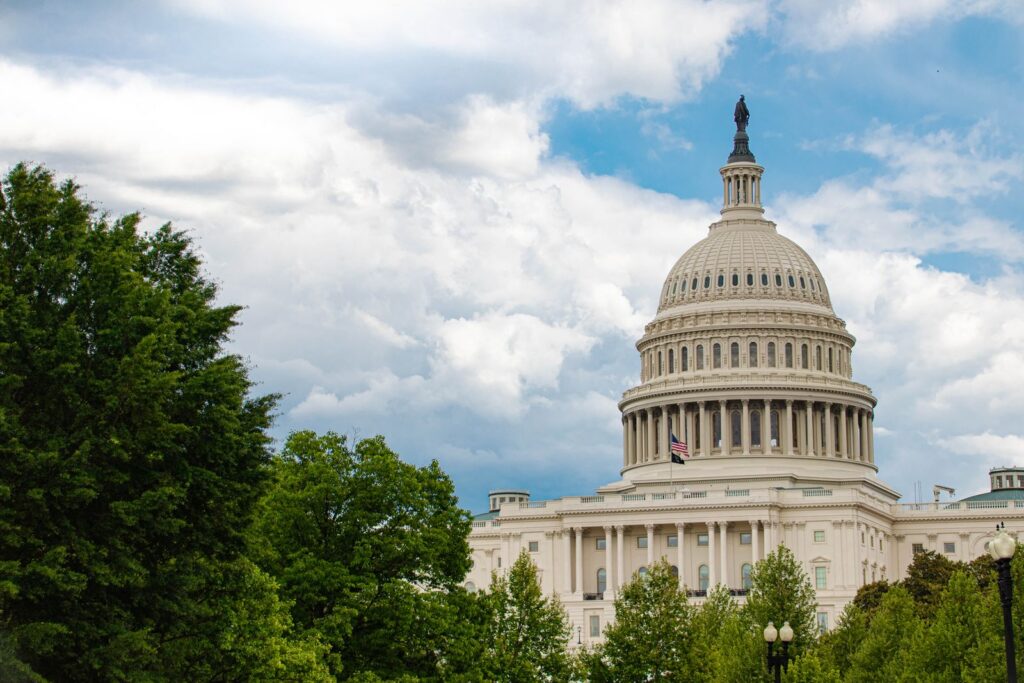
The key to turning this around lies on the floor of Congress: co-sponsoring H. Res. 69, “Celebrating Hindu Americans, condemning attacks on Hindu places of worship, Hinduphobia, and anti-Hindu bigotry, and for other purposes,” a bipartisan resolution introduced to celebrate American Hindu contributions and explicitly condemn Hinduphobia officially.
When far-right agitators target American Hindus, they create an unstable vacuum, and the greatest beneficiaries are, ironically, radical Islamists and their extreme-left allies.
Historically and globally, Hindus and Indians remain the primary victims of Islamist aggression. Yet, when anti-Hindu incidents flare up across Texas and other parts of the country, Islamists expertly weaponize these moments. They use far-right bigotry as a shield to deflect public attention away from their own expansionist agendas.
Simultaneously, pro-Maoist, extreme-left factions exploit these attacks to pull Indian Americans into a superficial, highly manipulative “people of color” solidarity narrative.
In this carefully constructed leftist framework, the specific trauma and distinct identity of the American Hindu community are completely erased, rendering them subservient to the broader Islamist political agenda.
Look no further than the recent elections in Frisco, Texas, to see how this toxic dynamic plays out on the ground.
Frisco, a fast-growing Dallas suburb where nearly 20 percent of the population is of Indian origin, became a dark flashpoint for the party’s internal identity crisis. Far-right activists and outside agitators routinely descended on the town and even tore an Indian flag in a demonstration.
In the mayoral race, a candidate aligned with this extreme rhetoric openly vilified the immigrant population. The result was a decisive, self-inflicted defeat for the nativist camp. Suburban voters, including conservative-leaning Indian Americans who moved to Texas for safer neighborhoods and better schools, rejected the vitriol.
Frisco proved that anti-Hindu and anti-Indian bigotry is a losing political strategy in modern American suburbs.
The shifting allegiance of Indian American voters is backed by hard numbers. Polling data shows that Indian affiliation with the Democratic Party dropped by close to 10 percentage points between 2020 and 2024, with one in three Indians actively planning to vote Republican.
This shift is critical because Indian Americans are strategically concentrated in highly competitive, “purple” congressional districts where a few thousand votes decide the majority. In Texas districts like TX-22 and TX-24, the suburbs around Houston and Dallas-Fort Worth boast some of the highest concentrations of South Asian voters in the country, capable of tilting close suburban seats.
In Georgia’s GA-06 and GA-07, the Atlanta suburbs feature rapidly growing Hindu American populations that have already proven to be the deciding margins in statewide and federal races. Meanwhile, in Virginia’s VA-07 and VA-10, the tech-heavy corridors of Northern Virginia are filled with high-skilled Indian American professionals who vote at incredibly high rates.
If the GOP allows anti-Hindu and anti-Indian rhetoric to go unchecked, these voters will stay home or swing back left out of basic self-preservation.
By targeting American Hindus, who overwhelmingly enter the United States as highly skilled, law-abiding legal immigrants, the far-right unwittingly validates the extreme left’s entire worldview.
The hard left relies on a rigid “oppressor versus oppressed” dynamic. When highly successful, integrated American Hindus are subjected to xenophobic abuse, the left is handed an easy opening to legitimize and weaponize their narrative. They can smugly point to these attacks and argue that America is fundamentally and systematically unsafe for anyone who isn’t white.
By failing to aggressively police its own fringes, the GOP forces a highly conservative, naturally independent demographic right into the waiting arms of the progressive coalition.
Ultimately, passing H. Res. 69 isn’t just a matter of moral clarity. It is a political necessity.
By aggressively co-sponsoring the resolution, the GOP can signal to millions of American Hindus that their faith, their safety, and their contributions are valued. It cuts the legs out from under the left’s racial narratives, exposes the opportunism of Islamist organizations, and protects the precise suburban margins the GOP needs to secure the midterms.
Adelle Nazarian is a Senior Fellow at the Gold Institute for International Strategy, a Washington D.C.-based foreign policy and defense think tank.