There has been little written about the other basic military components of the Iranian military. We’ve heard about their drones, their ballistic missiles, their destroyed navy and Air Force, but little has been written or discussed about the basic military order of battle. To a Soldier, this is an important aspect of an enemy one might face. The conventional Iranian military (not the IRGC) is a substantial part of Iran’s overall military force structure. If we are to conduct ground operations, we will likely face these elements, and despite the challenges of a lack of training or a modern supply system, they will be formidable enemy forces. As the conflict in the Middle East accelerates and the possibility of American ground engagement grows more certain, we cannot afford to engage the enemy with incomplete intelligence about his true order of battle.
What follows is a strategic assessment of Iran’s conventional military forces, their structure, and their capabilities.
Iran’s conventional army (the Artesh Ground Forces / Islamic Republic of Iran Ground Forces) is sized for large-scale territorial defense, with substantial numerical strength in manpower, armor, and especially artillery, though much of the equipment is aging.
Manpower
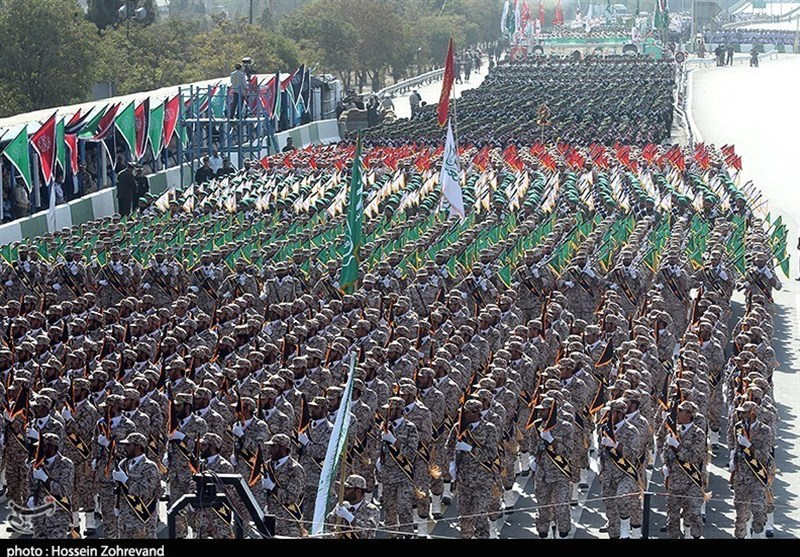
- Active personnel: Approximately 350,000.
- A large share (roughly 200,000–220,000) consists of conscripts serving limited terms. Professional/volunteer cadres are smaller.
- This forms the bulk of Iran’s conventional ground strength. The IRGC Ground Forces are a parallel, more ideologically oriented force of roughly 150,000–190,000, lighter in heavy equipment and oriented toward internal security, rapid response, and asymmetric/expeditionary roles.
- The total number of active Iranian military personnel is around 610,000.
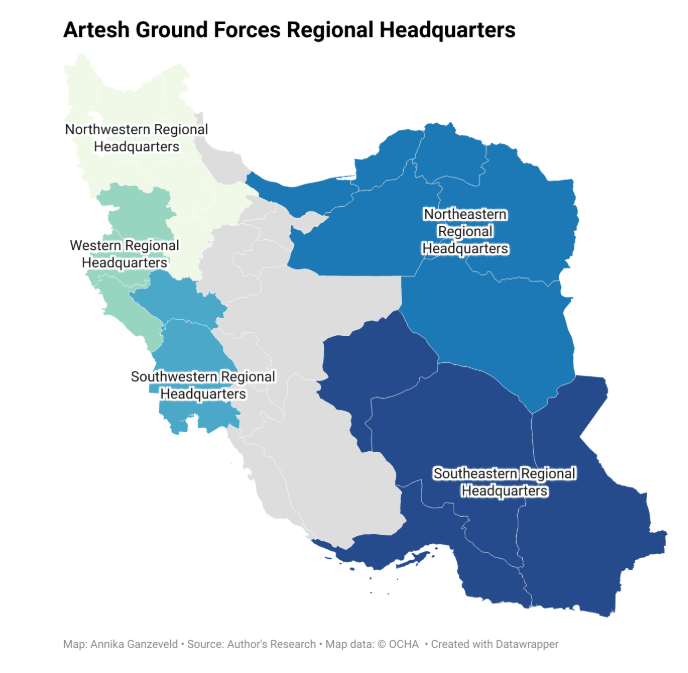
The Artesh is organized under five regional (corps-level) headquarters, with a mix of remaining divisions (armored, mechanized, infantry) and a larger number of independent brigades (including mobile assault, mechanized, armored, special forces/takavar, and airborne units such as the 55th and 65th). Open-source order-of-battle work identifies dozens of brigades overall.
Armor
Main battle tanks: Approximately 1,500–1,600 in the more conservative inventories used by detailed open-source assessments and IISS-aligned figures (Global Firepower lists a higher 2,675, which appears to use a broader counting methodology).
Approximate composition (rounded, from equipment inventories):
- T-72S: 480
- T-72Z / Safir-74 (upgraded T-55/Type 59): 540
- M60A1 (including local Samsam/Soleiman upgrades): 150
- Chieftain / Mobarez: 100
- T-62: 75
- M47/M48: 150–170
- Indigenous Zulfiqar series and limited numbers of the newer Karrar (hundreds planned/on order; production and fielding remain limited relative to goals)
- Infantry fighting vehicles: 610 (primarily BMP-1 210 and BMP-2 400)
- Armored personnel carriers and lighter armor: Several hundred (BTR-50/60 variants, Boragh, M113, plus lighter vehicles)
- Total tracked/wheeled combat and support vehicles for the ground forces are in the low thousands.
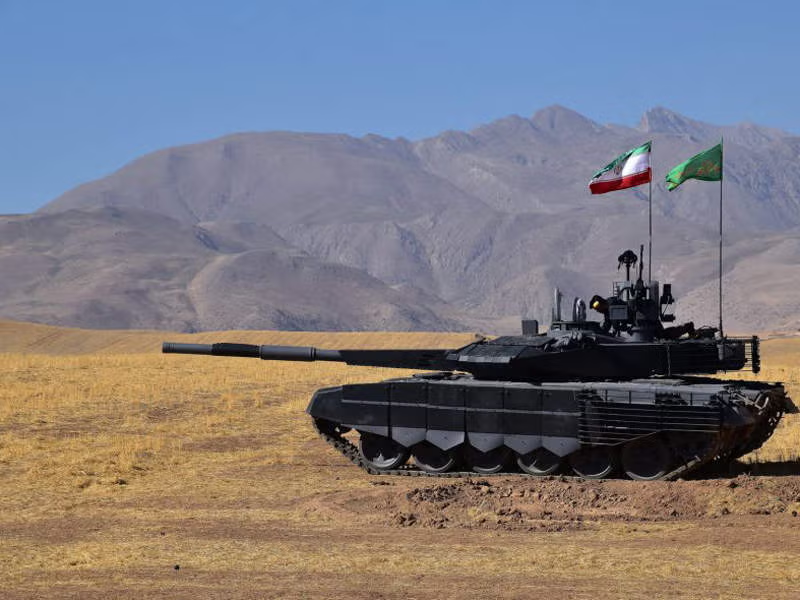
Much of the fleet consists of 1970s–1990s designs (Western pre-revolution stocks plus Soviet/Chinese and local modernizations). Serviceability is uncertain and constrained by sanctions, spare parts, and age; readiness is generally assessed as moderate rather than high.
Artillery
Iran’s conventional army fields one of the larger artillery parks in the region by sheer numbers, optimized for defensive massed fire:
- Self-propelled artillery: 290–420 (M109 155 mm family and local variants, 2S1 Gvozdika 122 mm, M110 203 mm, North Korean M-1978 170 mm, etc.)
- Towed artillery: 1,800–2,030 (heavy concentration of 130 mm M-46/Type 59 985, D-30 122 mm ~540, plus 105 mm, 152/155 mm, and heavier pieces)
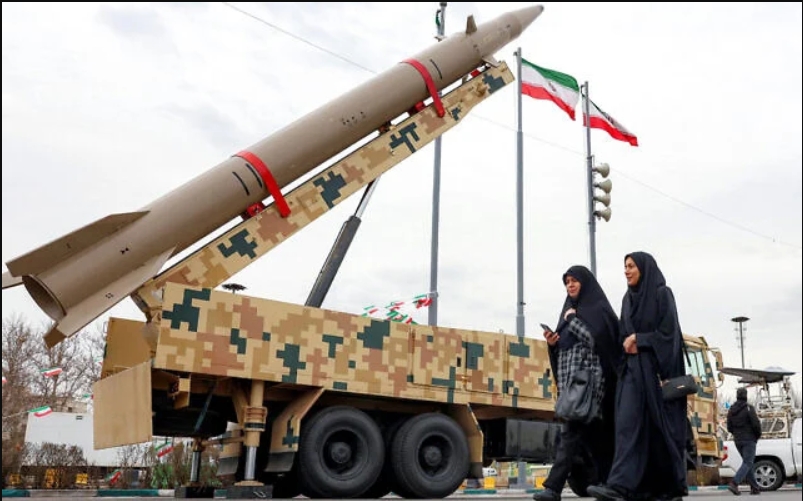
- Multiple-launch rocket systems (MLRS): 1,475–1,550 (large numbers of 107 mm and 122 mm systems such as Type 63/Fajr-1 and Grad/Arash variants, plus larger Fajr-3/5 and other systems)
Total tube + rocket artillery is several thousand pieces. This provides significant volume of fire for defensive operations, though precision, mobility, and counter-battery capabilities lag modern Western or Israeli standards.
Overall Assessment
The Artesh Ground Forces emphasize quantity, defensive depth, and artillery mass over high-end mobility or technological sophistication. Heavy conventional armor and artillery are primarily assigned to the Artesh rather than the IRGC. Equipment modernization has been incremental (local upgrades to T-72s, M60s, and indigenous designs like Karrar/Zulfiqar), constrained by sanctions. Recent air and missile-centric conflicts in 2025–2026 appear to have left the ground force structure and heavy equipment largely intact, as there was no large-scale ground campaign.
Figures are estimates drawn from open sources (IISS Military Balance citations, Global Firepower aggregates, detailed equipment lists, and order-of-battle analyses). Exact serviceable numbers, ammunition stocks, and training levels are not publicly confirmed and vary by unit.
This is all to say, if the president decides to conduct a ground invasion, it will not be a cakewalk. While the U.S. Military is well trained, the size of the Iranian conventional forces, their dedication to their ideological cause and the local knowledge of the terrain and environment offers them significant advantages.
Michael T. Flynn, LTG USA (Ret.) is the chairman of the Gold Institute for International Strategy, a Washington, DC-based think-and-do tank.