America is at war. Not the kind of war announced in joint sessions of Congress with unanimous applause. The kind of war that wages in silence until the bill comes due, paid in blood and treasure by those who had no say in incurring the debt.
In the past seventy-five years, many presidents have wielded the power of the American military in sustained combat operations. Some of them understood what it signifies to lead a nation during a time of war. Others did not. The difference between understanding and ignorance was written in the lives of American soldiers and in the geostrategic position and gain or loss of prestige of the United States itself.
Every wartime president confronts fundamental questions: What is the purpose and nature of the conflict, and by what criteria will victory be determined?
Presidents who addressed these questions early on with clarity and candor achieved military success, or at minimum, secured battlefield victories even if postwar peace proved elusive. In contrast, those who failed to answer it, or who offered inconsistent explanations publicly and privately, suffered defeats both in war and in peace. The defeats resulted in significant loss of life, massive draining of national resources and further loss of American prestige on the world stage. Victories on the other hand, brought relative peace, prosperity and increased American prestige at home and abroad.
This is not about a wartime Commander in Chief’s courage or patriotism. All of these “wartime” Presidents believed they were making the right choices, but beliefs and truth are not the same thing.
Qualities That Separate Successful Wartime Presidents from Failed Ones
Historical analysis shows that successful wartime presidents exhibit certain enduring characteristics. These characteristics underlying effective strategic leadership have remained consistent over time.
1. Clarity of Political Purpose
Prior to deploying American service members into a wartime theater of operation, the president must articulate a clear political end state. Victory should not be defined exclusively by tactical successes or the military defeat of adversaries, but rather by the desired political conditions following the conflict. This objective must be communicated with sufficient clarity to guarantee public understanding. Without a defined concept of victory, achieving it becomes improbable.
2. An Honest Accounting of Cost
All wars entail costs in terms of lives, resources, national focus, international prestige, and lost opportunities. A wartime president is obligated to assess these costs transparently before initiating military action and to communicate them candidly to the public. Effective leadership entails preparing the nation for sacrifice rather than obscuring difficult truths.
3. Strategic Patience Tempered by Strategic Discipline
Wars are rarely won through superior firepower alone. They are contests of endurance, industrial capacity, national resolve, and political will. A president must possess the patience to sustain a necessary campaign even when progress is slow and public support begins to waver. Equally important, however, is the discipline to recognize when assumptions have proven false, when circumstances have changed, or when objectives can no longer be achieved at an acceptable cost. Perseverance is a virtue; stubbornness is not.
4. The Courage to Tell the Truth
Perhaps no quality is more difficult or more essential than intellectual honesty. When campaigns falter, when allies fail to meet expectations, or when a strategy produces diminishing returns, a president must speak truthfully to Congress and the American people. Citizens can endure setbacks and accept sacrifice, but ultimately, the perception that facts are being concealed or that success is being portrayed when none exists weakens public faith.
5. Fidelity to the Constitution
The Constitution intentionally limits the concentration of wartime authority. While the President serves as Commander in Chief, this role does not confer unchecked power. Military action must remain subordinate to constitutional governance and accountable to elected representatives. The Framers recognized that those who authorize war seldom bear its greatest burdens. Consequently, transparency, congressional oversight, and constitutional restraint are not impediments to victory but rather constitute foundational principles that distinguish a constitutional republic from its adversaries.
6. Moral Clarity
A clear sense of right and wrong that guides decisions even when popular opinion or elite consensus points the other way.
7. Personal Courage
The willingness to accept responsibility, absorb criticism, and risk political ruin rather than compromise core objectives.
The Winners: Washington, Lincoln, and Roosevelt
George Washington
Washington pursued independence with a clear understanding of victory: the establishment of a sovereign republic governed by a Constitution rather than a monarchy. He recognized that the most challenging aspect of victory is the exercise of power in its aftermath.
His long military experience fighting in the French-Indian War as a young British officer gained him an extraordinary set of experiences that prepared him as he rose to become Commanding General of the Continental Army. Throughout the American Revolution, General Washington never took his eye off the ultimate objective, to secure the “cause”, as he referred to it, for Freedom.
Upon the war’s conclusion, he declined to assume dictatorial authority, instead returning power to the people and establishing a precedent by refusing a third term. Washington understood that internal corruption and the pursuit of power posed greater threats to the republic than external adversaries. For these reasons, he is regarded as the preeminent wartime president in American history.
Abraham Lincoln
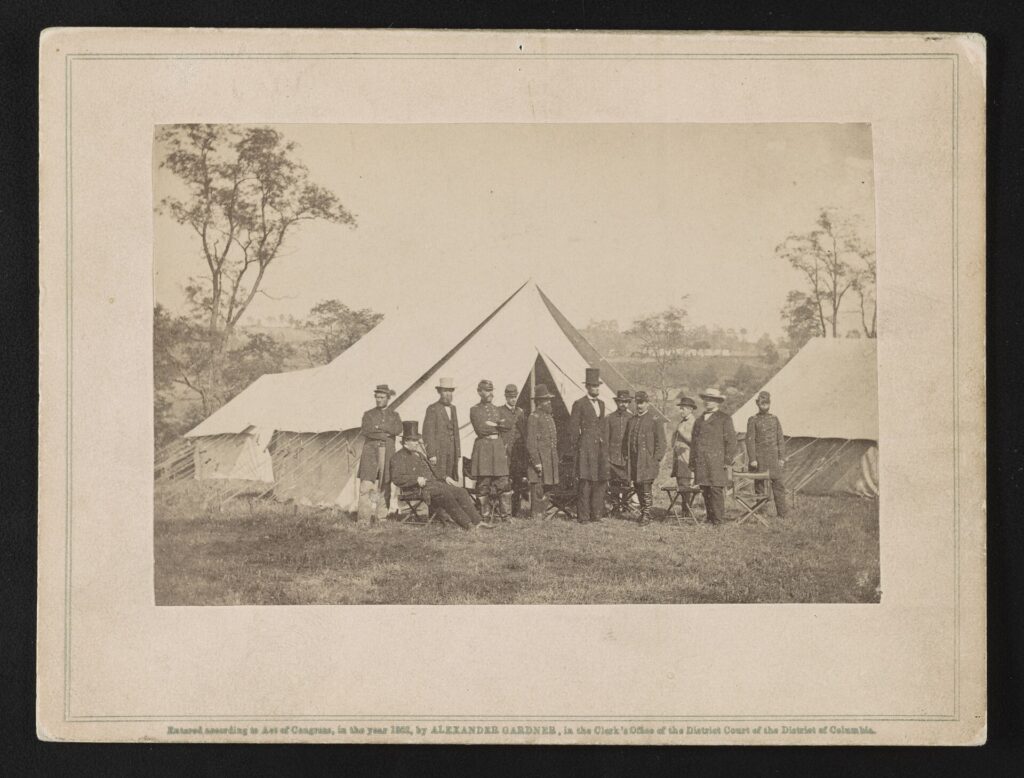
Lincoln assumed leadership of a nation in crisis and fought to preserve its unity. Although lacking military experience and facing persistent criticism, he maintained a clear objective: to save the Union. He replaced ineffective generals and accepted the immense human cost, recognizing that the dissolution of the Union would be even more detrimental. Lincoln communicated transparently about the war’s significance and necessity. Upon his assassination, he left a restored nation, a reaffirmed Constitution, and the moral clarity that the sacrifices undertaken were justified and never to be taken lightly nor in vain.
Franklin Delano Roosevelt
Roosevelt recognized the threat posed by Nazi Germany well before the attack on Pearl Harbor. Upon the outbreak of war, he undertook the unprecedented step of mobilizing the entire American economy for total war. He incorporated business leadership into the war effort, established the War Production Board, and transformed the United States into a leading industrial power. Unemployment rates declined sharply, and industrial output surged. Roosevelt understood that victory depended not only on military personnel but also on industrial capacity, engineering, and logistics. More importantly, Roosevelt communicated honestly with the public regarding the costs of victory, encouraging trust, and unified resolve.
American presidents have repeatedly demonstrated success in critical confrontations, guided by a consistent set of defining characteristics. These hard-won lessons must not be forgotten.
What America Needs Now
Let there be no doubt that America is at war. We have been at war with zero strategic victories since the Korean War in the early 1950s (nearly 80 years), with one exception (the Cold War). Victories, during a string of foreign wars, dating to the 1950s, have been elusive for many reasons, all of which have one defining component, the lack of clearly identifying achievable political purpose along with a clear set of achievable objectives. Our focus has simply not been on winning politically.
Instead of engaging in declared conflicts with foreign nations, America has waged war in continuous low-level conflicts across multiple domains and regions: economic competition, information warfare, tactical military engagements with tactical military victories and many other proxy-use wars in multiple theaters of conflict simultaneously. So many resulting in substantial costs in resources, prestige, and sadly, lives.
A wartime president must understand the enduring lessons of history. The leaders who successfully guided the nation through conflict shared several defining characteristics:
- Clarity of purpose and focus on the ultimate political objective
- Brutal honesty with the American people
- Respect for the Constitution
- A keen understanding that military power is but one instrument of political purpose and not an end in itself
- The wisdom to know when to disengage
The presidents who adhered to these principles often overcame extraordinary challenges and achieved lasting strategic success. Those who ignored them too often expended American lives, treasure, and national resolve on objectives that were either unattainable or insufficient to justify the cost.
Our generation has not experienced a direct great-power war. Maybe that’s the point. I tend to believe there are influential forces that create conditions for wars to justify their own existence. There exist ample examples of this notion. Our entrance into the Vietnam War is one.
Since the end of the Cold War, the United States has not confronted a near-peer adversary in conventional combat, nor has the nation mobilized for total war on the scale last witnessed during World War II. Yet today’s conflicts demand strategic discipline no less than those of previous generations.
America can do better and requires leaders who understand history, define achievable objectives, respect constitutional limits, and place the nation’s interests above political expediency. Above all else, it will require citizens who demand those qualities from the men and women they elect to lead our nation in peace or war.
Michael T. Flynn, LTG USA (Ret.) is the chairman of the Gold Institute for International Strategy, a Washington, DC-based think-and-do tank.